

Blog · 30 September 2026 · 9 min read
Beard transplant: procedure, costs and what you should know
Gaps on the cheeks or chin, a moustache that does not join up, or a scar where hair no longer grows: many men see this in the mirror every day. A beard transplant can fill in such areas with your own hair – within limits you should know about beforehand.
Medically reviewed by Dr. med. Martin Reifenrath, Specialist in Plastic and Aesthetic Surgery · Last updated:
Key points at a glance
- Your own hair roots are usually taken from the fringe of hair at the back of the head and placed individually in the gaps in the beard, in the direction in which it grows.
- A beard transplant is mainly an option for patchy beard growth, scars and clearer contours. For alopecia areata in the beard, it is usually not the first choice.
- Redness, swelling and small crusts are usual at first. You may only shave once the treating practice allows it.
- The new hairs usually grow from the third to fourth month, and the overall result shows after about ten to fourteen months – this varies from person to person.
- Donor hair is limited; sometimes a second session is needed.
- Costs at Hair Doctors according to the price list: beard €5,500–8,500, moustache alone €2,400–3,600. The exact price is set in the consultation.
What is a beard transplant?
In a beard transplant, also known as a facial hair transplant, hair roots are moved from a densely haired area into the beard. They usually come from the fringe of hair at the back of the head: these hairs are generally not affected by hereditary hair loss and are fairly close to beard hair in thickness and structure. Hairs from under the chin are also suitable for small areas, but there are only a few of them.
What is transplanted are so-called grafts, tiny units with one to four hairs. They are harvested either individually with a fine hollow needle (FUE method) or as a narrow strip of skin (FUT method); the comparison of the two methods shows the differences.
Who is a beard transplant suitable for?
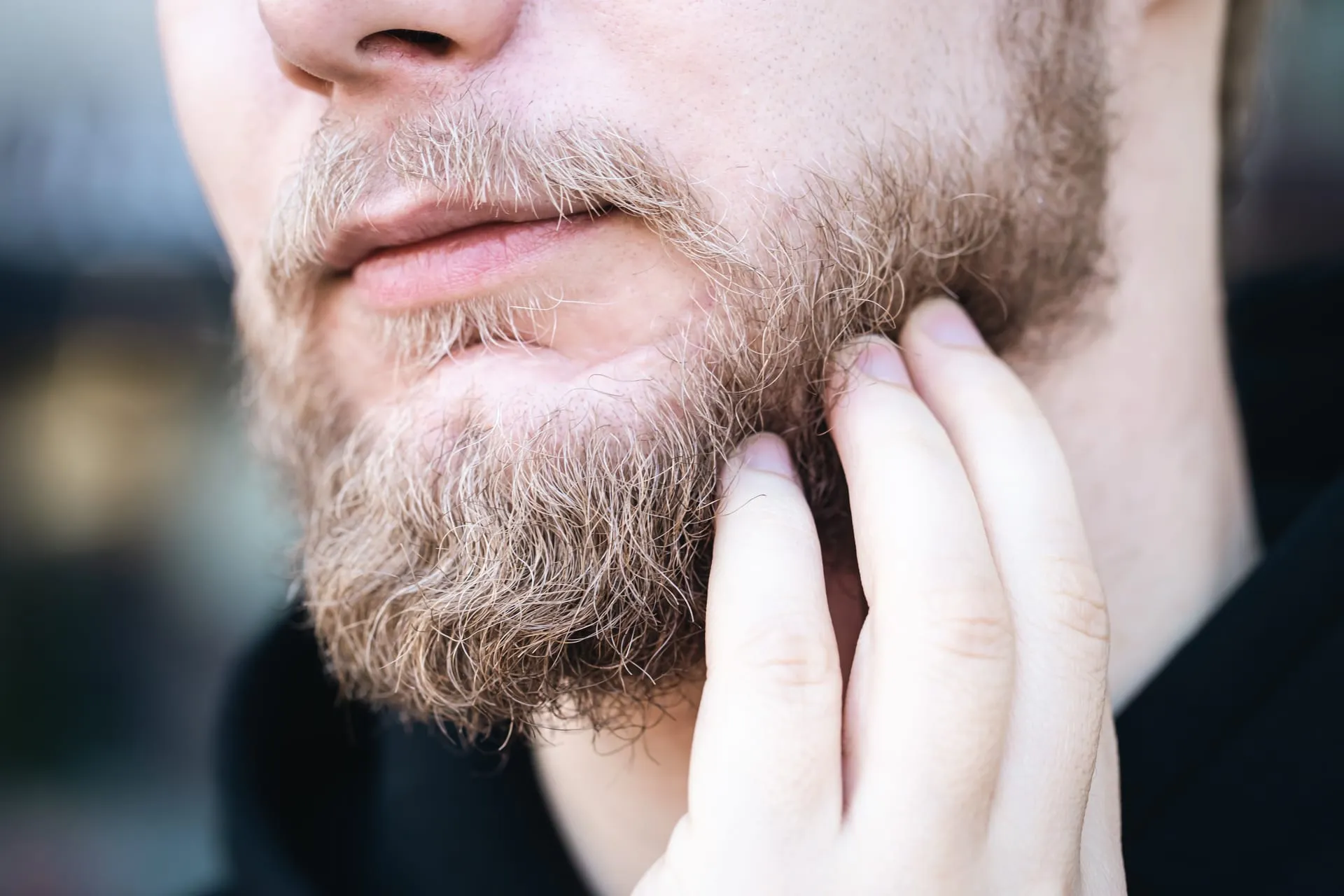
The most common reason is a beard that naturally grows patchily or very sparsely. Then there are scars from accidents, burns, acne or operations, for example on the moustache after the correction of a cleft lip. Others want clearer contours: a closed cheek line, a denser chin beard, sideburns or a moustache that joins the chin beard.
Two requirements apply. The skin in the beard area should be healthy; inflammation or active acne is treated first. And there must be enough donor hair at the back of the head. Good to know for younger men: in many, the beard continues to get denser until about their mid-thirties.
When is a beard transplant not the first choice?
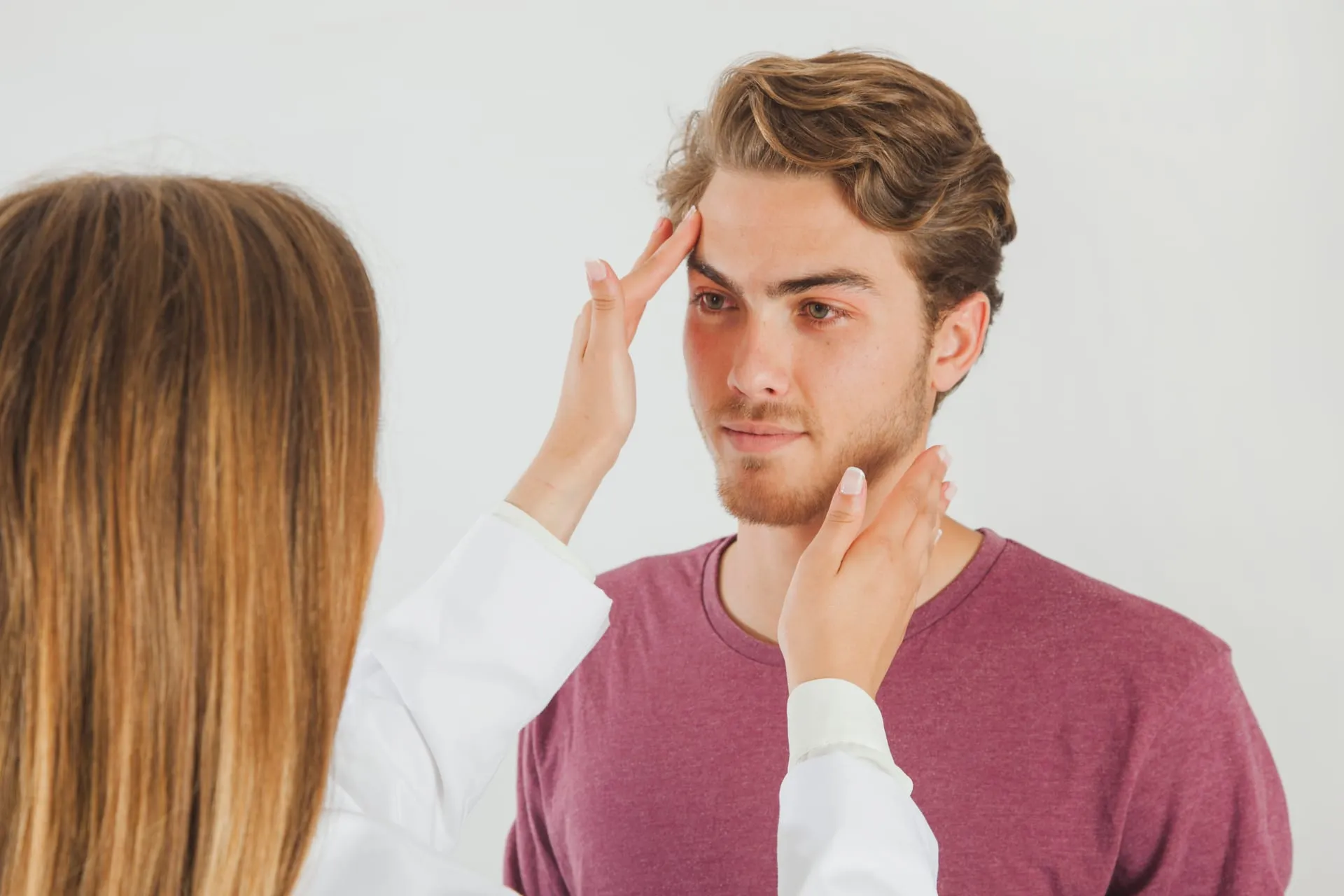
An important example is alopecia areata (patchy hair loss), in which the body’s own immune system attacks the hair roots. The beard is often affected, and the hairs can grow back on their own. The focus is on drug treatment prescribed by a dermatologist. A guide from the international professional society for hair surgery states that a transplant is generally not recommended as the first treatment here; one review mentions long-standing cases as a possible exception. More on this in the guide Patchy hair loss in the beard.
Fungal infections or inflammation of the hair roots can also cause gaps – so the cause should first be clarified by a doctor. And if hair loss on the head is progressing, restraint makes sense: every hair that moves to the beard will later be missing for a possible hair transplant on the head.
How does a beard transplant work?
The procedure is similar to an eyebrow transplant: hairs are harvested from the head and placed individually in the face.
Planning
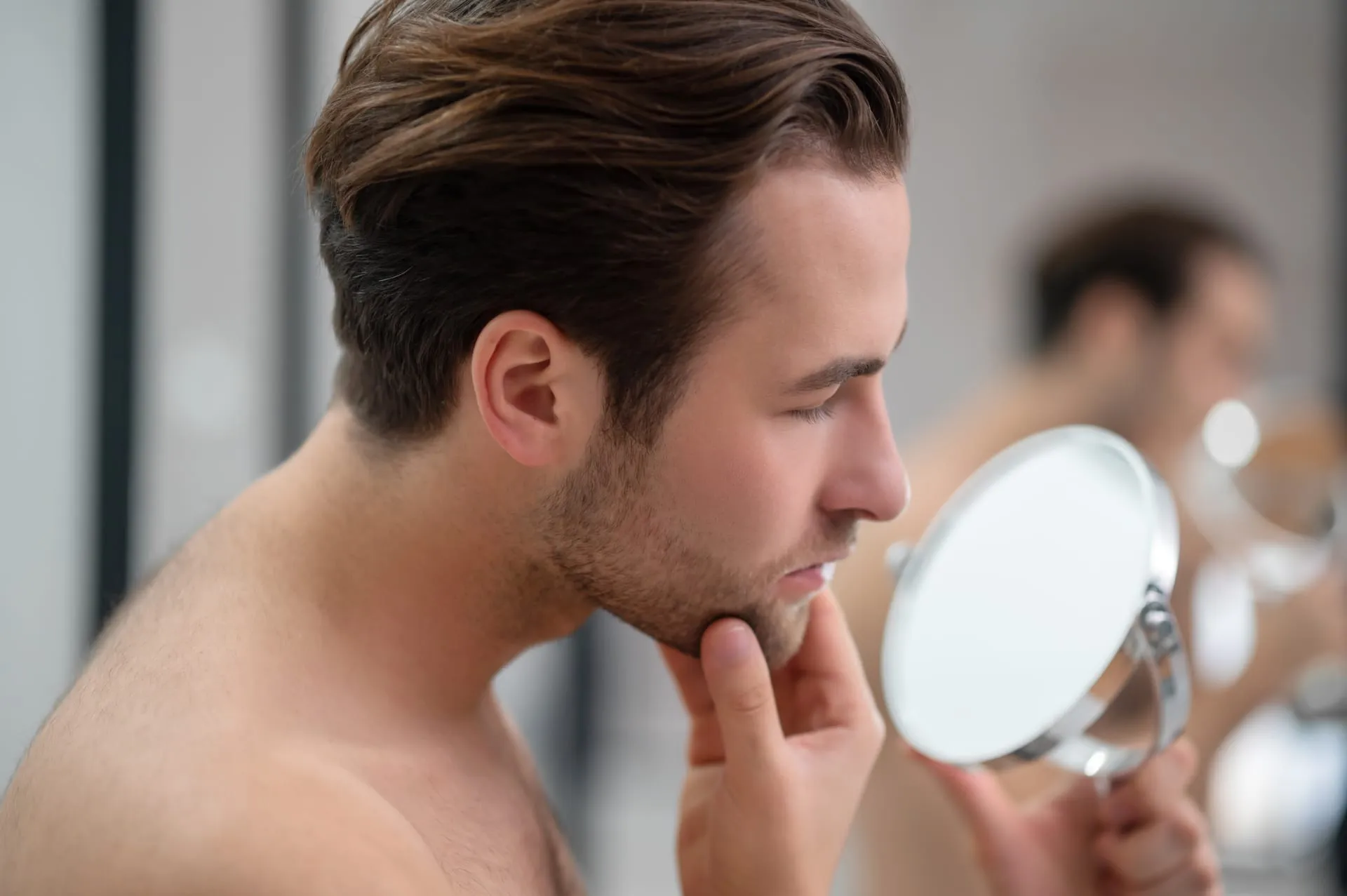
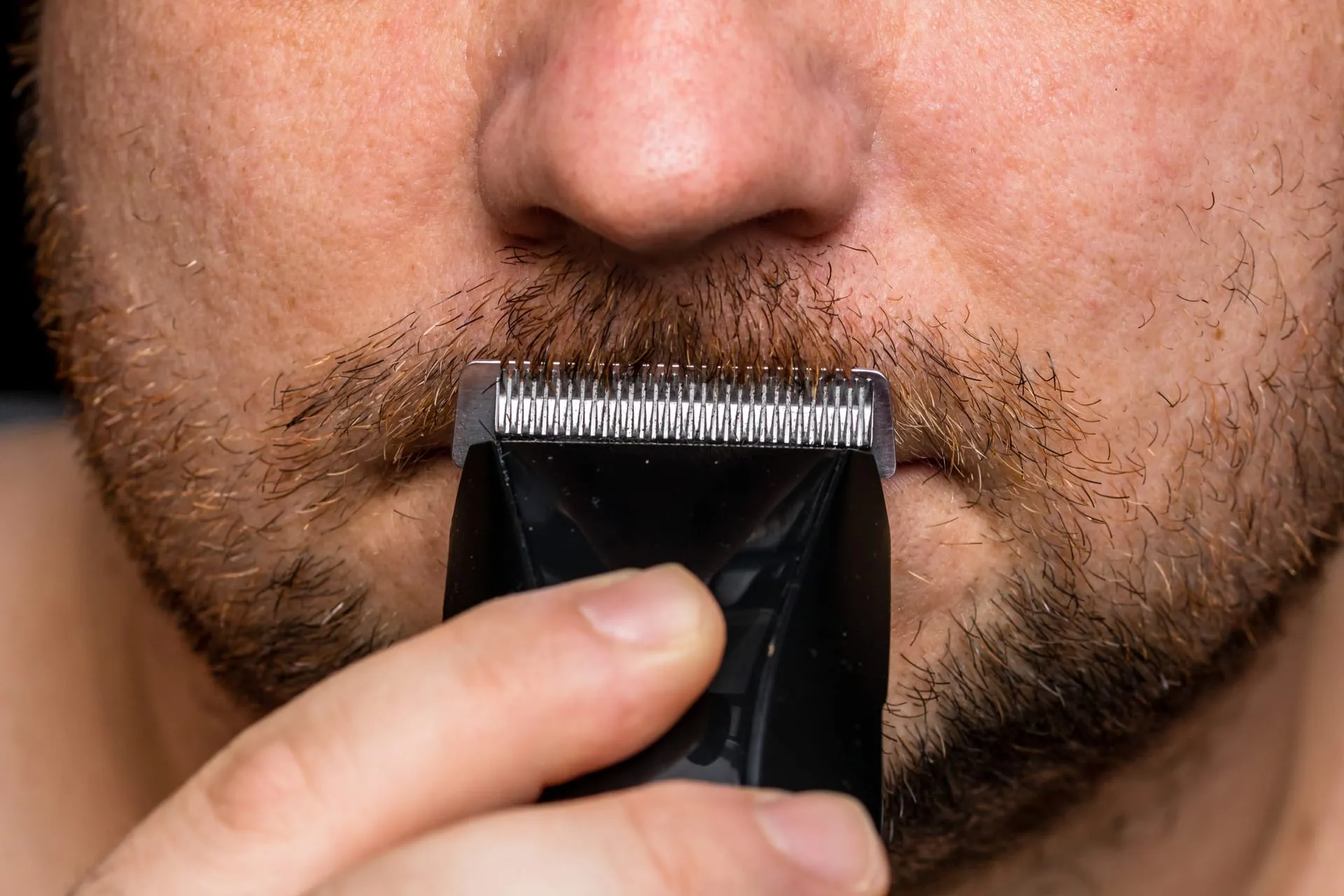
First, the desired shape is drawn on the skin, the area measured and the required number of grafts calculated. Depending on the goal, the international professional society for hair surgery cites a few hundred to more than 2,000 grafts. An existing beard is trimmed to a few millimetres beforehand so that the gaps are clearly visible.
Anaesthesia and harvesting
The treatment is carried out under local anaesthetic. The injections in the face can be painful; after that, the area is numb. The donor area at the back of the head is usually shaved for harvesting, but the beard itself is not. In total, the procedure can take several hours.
Placement in the direction of growth
The grafts are placed individually into tiny incisions, as flat to the skin as possible and in the direction in which the beard hairs grow at that point. If hair no longer grows there, the direction is based on the other side of the face. Single hairs are usually placed at the edges so that the contour tapers off softly.
Healing: what is normal after the procedure?
On the day of the procedure, liquid or soft food is usually recommended. Mild redness and swelling of the face are usual and generally subside after two to three days; swelling and bruising caused by the injected fluid can be visible for up to a week. Small crusts form at the harvesting and placement sites. Do not scratch them off – the treating practice will tell you when you may gently loosen them.
The same applies to shaving: only once you have been told you may, because the instructions differ from practice to practice. In the first few days, no pressure should be put on the fresh grafts, and it is best to avoid strong sun.
In the first few weeks, transplanted hairs often fall out; this is part of the process. They grow back from the third to fourth month, and the overall result shows after about ten to fourteen months. You will find care tips in the article on aftercare after a hair transplant.
An honest assessment: risks and limits of a beard transplant
A beard transplant is a surgical procedure with typical risks. Not every graft takes; there is no guarantee. Hairs can grow at an unfavourable angle, for example because the loose facial skin shifts during healing; the beard then looks uneven. A border drawn too straight looks artificial. Small skin bumps can form around the grafts under the lower lip and on the chin. The face has a good blood supply and can bleed more during the procedure, and excessive injury to superficial nerves can temporarily paralyse facial muscles. Inflammation of the hair roots, infections and small cysts caused by ingrown hairs are rare. Especially with dark skin, the treated area can become darker. Fine scars remain at the back of the head: after single extraction, light dots that may be noticeable if the head is shaved very short; after strip harvesting, a line.
A key limit is donor hair. It does not grow back, and what ends up in the beard is later missing for the head. Because the number of grafts is limited, it often comes down to: denser on a small area or sparser on a large one – with lower density, the beard has to be worn longer so that it covers the gaps. Scalp hair is also usually finer than beard hair; whether it matches your beard is part of the planning. With scars, it is uncertain how well the tissue will supply the grafts; sometimes a test area is therefore treated first. A second session may also be needed in other cases. And: the shape you choose today will stay – even if tastes or beard fashions change.
Beard transplant: experiences from a study
What the course can look like is shown by a case series from a dermatology clinic with 20 men, most of them with burn scars in the beard: growth began after about three months and continued until around the ninth month. With the scars, several sessions were needed to achieve sufficient density. Nineteen of the 20 men were satisfied with the final result, one was not. The significance is limited: it is a small group from a single clinic, and results vary from person to person.
Beard transplant in Germany: how to recognise careful planning
If you are comparing offers for a beard transplant in Germany, these questions will help:
- Who operates? Ask which steps the doctor carries out personally and who else in the team is involved.
- Is the cause of the gaps clarified before planning begins?
- Are the limits discussed openly – donor hair, achievable density, a possible second session?
- Is it clear what is included in the price and who will look after you after the procedure?

How much does a beard transplant cost?
In the Hair Doctors price list, the beard is listed as an example of a large hair transplant: €5,500–8,500. The moustache alone is listed there under the small hair transplant: €2,400–3,600. The amount that applies to you is set in the consultation, based on the area and the number of grafts.
According to the Costs and prices page, the price includes, among other things, laboratory tests, anaesthesia, the outpatient stay, and aftercare and check-ups; for residents of Germany, payment in instalments is possible. As a rule, you bear the costs yourself, because health insurance generally does not reimburse a hair transplant. The graft calculator shows how the number of grafts and the cost range are related for areas on the head; for the beard, the number is determined in the consultation.
Beard transplant at Hair Doctors: your consultation
Whether a beard transplant makes sense for you can only be said after a personal examination. At Hair Doctors, simply select “Beard transplant” when booking and come to a 1:1 consultation with no obligation – in person at six locations in Dortmund, Düsseldorf, Hamburg, Nuremberg, Wertheim and Eindhoven (Netherlands) or by video. Every transplant is preceded by two consultations: we look at your beard and donor area, talk openly about limits and risks and set the price. We clarify in the consultation which method is suitable and at which location the treatment takes place. Treatment is in specialist hands – find out more about our specialists.
Frequently asked questions
How much does a beard transplant cost?
In the Hair Doctors price list, the beard is listed under the large hair transplant (€5,500–8,500) and the moustache alone under the small one (€2,400–3,600). The exact price is set in the consultation; health insurance generally does not reimburse a hair transplant. More on the Costs and prices page.
How many grafts do you need for a beard?
That depends on the area, the desired density and the donor hair. The international professional society for hair surgery cites a few hundred to more than 2,000 grafts. According to a review, a beard that has been very sparse from birth needs 2,000 to 2,500 grafts, a small scar or the moustache around 300 to 400.
Does a beard transplant hurt?
The treatment is carried out under local anaesthetic; the injections in the face in particular can be painful. Mild redness and swelling are usual in the days afterwards. How strongly you feel this varies from person to person.
When can I shave after a beard transplant?
Only when the treating practice allows it, because the instructions differ from practice to practice. Until then: no pressure on the fresh grafts, and do not scratch off crusts.
When can you see the result of a beard transplant?
In the first few weeks, transplanted hairs often fall out; this is part of the process. They grow back from the third to fourth month, and the overall result shows after about ten to fourteen months and varies from person to person.
Is a beard transplant permanent?
Transplanted hair roots usually retain the characteristics of the place they were taken from. Because hairs from the fringe of hair at the back of the head are usually not affected by hereditary hair loss, grafts that have taken generally continue to grow in the beard too. There is no guarantee; not every graft takes.
Does a beard transplant help with alopecia areata in the beard?
As a rule, it is not the first choice there: in alopecia areata (patchy hair loss), the immune system attacks the hair roots, the hairs can grow back on their own, and the focus is on drug treatment prescribed by a dermatologist. More in the guide Patchy hair loss in the beard.
Medical note:This article is for general information only and does not replace a medical examination, diagnosis or consultation. Whether a treatment is suitable for you, and which one, should be discussed in person with a specialist. Treatment results vary from person to person.
Show sources (6)
- García M, Garces M (2021, aktualisiert 2024): Beard and Mustache Transplant. International Society of Hair Restoration Surgery. ishrs.org/beard-mustache-transplant
- International Society of Hair Restoration Surgery (2024, aktualisiert 2025): Everything You Need to Know About a Beard Transplant. Expertenmeinung: Dr. Samuel Lam. ishrs.org/beard-transplant
- Dua K, Verma V, Dua A (2021): Beard and Moustache Reconstruction. Indian Journal of Plastic Surgery 54(4): 483–488. doi:10.1055/s-0041-1739248. pmc.ncbi.nlm.nih.gov/articles/PMC8719972
- Yaseen U, Ahmed S, Ahmed M (2021): Beard Reconstruction. International Journal of Trichology 13(6): 4–8. doi:10.4103/ijt.ijt_40_19. pmc.ncbi.nlm.nih.gov/articles/PMC8647705
- Vadachkoria S (2025, aktualisiert 2026): A Complete Guide to Alopecia Areata. International Society of Hair Restoration Surgery. ishrs.org/alopecia-areata
- Kaiser M, Abdin R, Yaghi M, Gaumond SI, Jimenez JJ, Issa NT (2023): Beard Alopecia: An Updated and Comprehensive Review of Etiologies, Presentation and Treatment. Journal of Clinical Medicine 12(14): 4793. doi:10.3390/jcm12144793. pmc.ncbi.nlm.nih.gov/articles/PMC10381635
Personal 1:1 consultation, no obligation
In person or conveniently by video.
In two consultations we work out with you which treatment suits you.