

Blog · 27 January 2024 · 13 min read
After your hair transplant: 10 care tips for calm healing and a strong result
The operation lays the foundation, but your discipline in the bathroom and on the pillow is the mortar that holds your new hair in place for decades.
Medically reviewed by Dr. med. Martin Reifenrath, Specialist in Plastic and Aesthetic Surgery · Last updated:
Maximum graft take: the critical weeks after the procedure
- Mechanical protection: in the first few days the grafts are not yet firmly anchored, so consistently avoid any friction, touching or pressure (e.g. from tight clothing or unconscious scratching) to prevent the follicles from being pulled out.
- Patience in the scab phase: scabs are natural wound protection and must never be removed by force – with gentle soaking during the prescribed washing routine, they come away by themselves after about 10 days.
- Avoiding stress factors: so as not to put blood flow and healing at risk, you should avoid sport, saunas and direct sun for at least two weeks and avoid nicotine and alcohol as far as possible.
After your hair transplant: 10 care tips from Hair Doctors
A hair transplant is not a “do it once and you’re done” project. The procedure marks the starting point – the following weeks help decide how well the grafts take, how calmly the scalp heals and how relaxed you are through the typical “in-between phase”. This is exactly where most mistakes happen: not out of carelessness, but because many everyday actions happen automatically. You touch your head, turn the shower hotter, pop to the gym “just for a moment” – and only realise later that your scalp is in no mood for experiments right now.
This article is intended as a practical guide. You get hair transplant aftercare without the platitudes: with clear principles, a realistic sense of timing and ten care tips that don’t just list things but explain them.
Note: every clinic works with its own protocols (products, washing days, medication). If anything in this article contradicts your individual instructions, what your treating practice has given you always applies.

The logic behind hair transplant aftercare
In the first few days, the grafts sit in tiny channels. These micro-wounds close quickly – but “closed” does not mean “able to take strain”. In the early phase, it essentially comes down to three things: you reduce mechanical irritation, you keep the risk of inflammation and infection low, and you support wound healing by keeping conditions calm.
That sounds abstract, but it is the key: once you have understood this logic, the individual rules no longer feel like prohibitions but like a plan. You actively take part – instead of constantly wondering whether you are doing “too little”.
A sense of timing: what is normal in which phase
Days 0–3: protection mode
Immediately after the procedure, the scalp is often sensitive. Redness, a feeling of tightness and slight swelling (often around the forehead or eyes) can occur. In this phase, what matters most is rest, a clean environment and no pressure on the recipient area.
Days 4–10: scab phase
Small scabs are part of wound healing. The urge to “give it a quick thorough clean” is understandable – but that is exactly what can put mechanical stress on the grafts. Now it is about gentle washing according to plan, and patience.
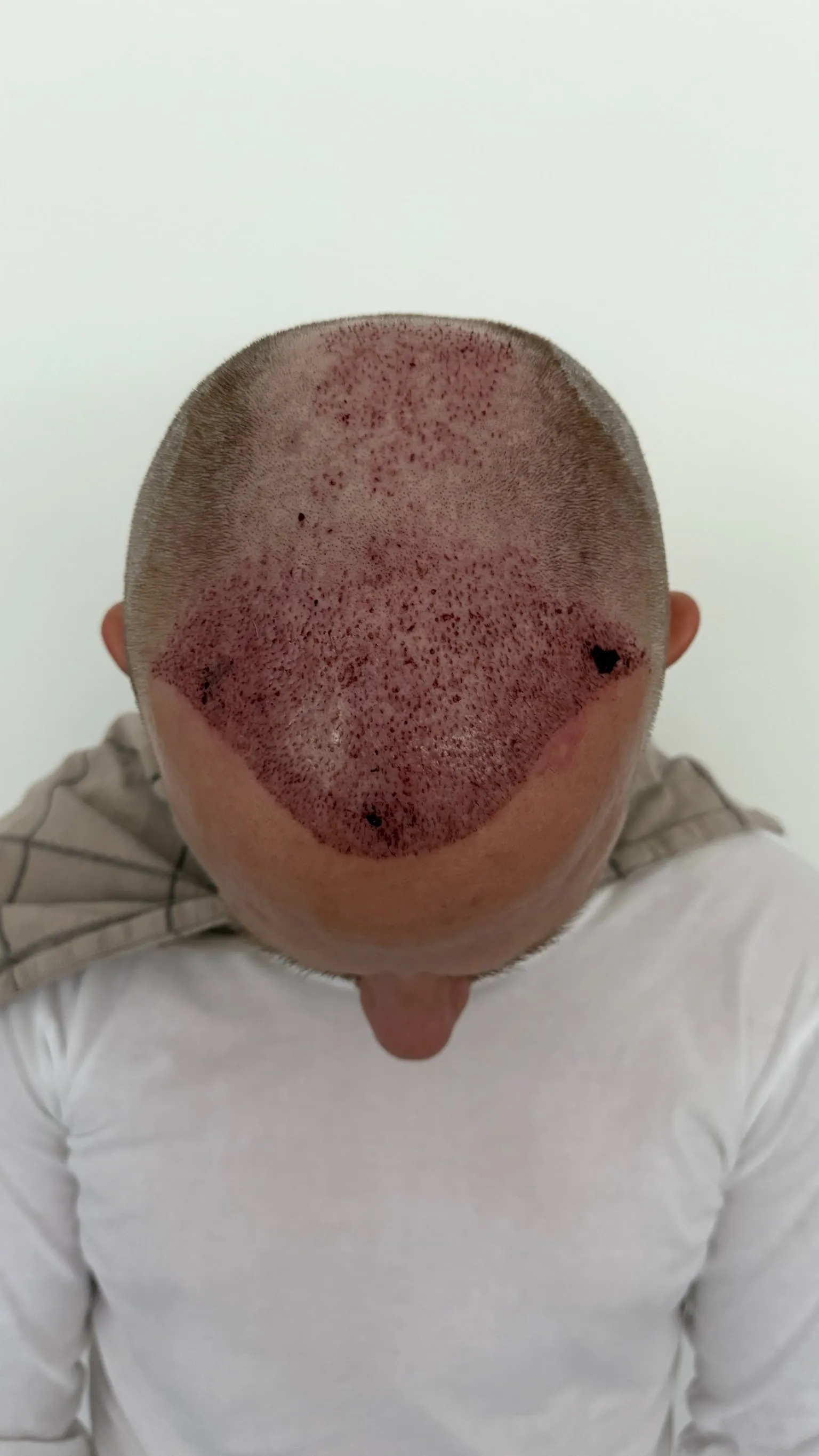 Day 1
Day 1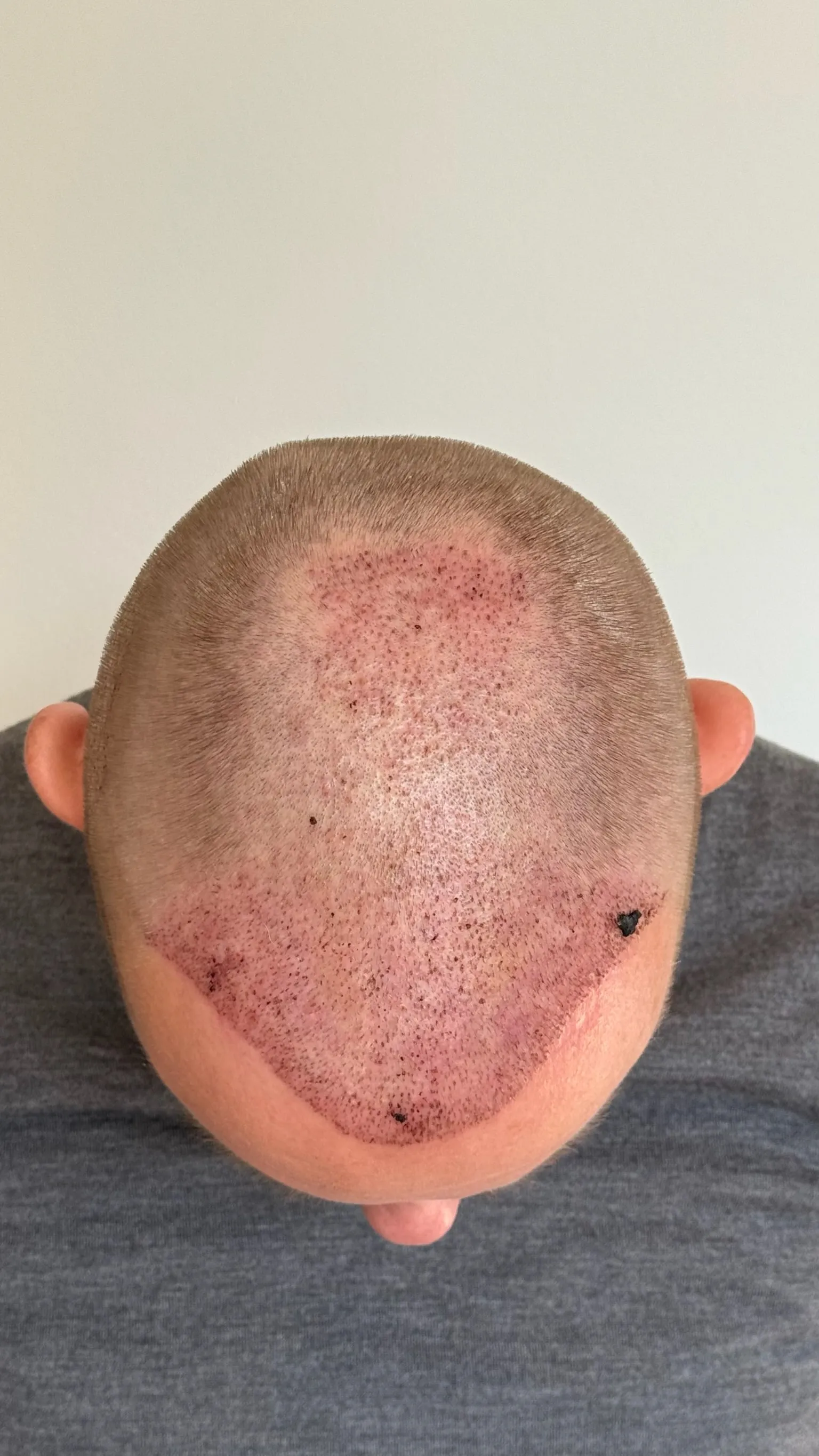 Day 4
Day 4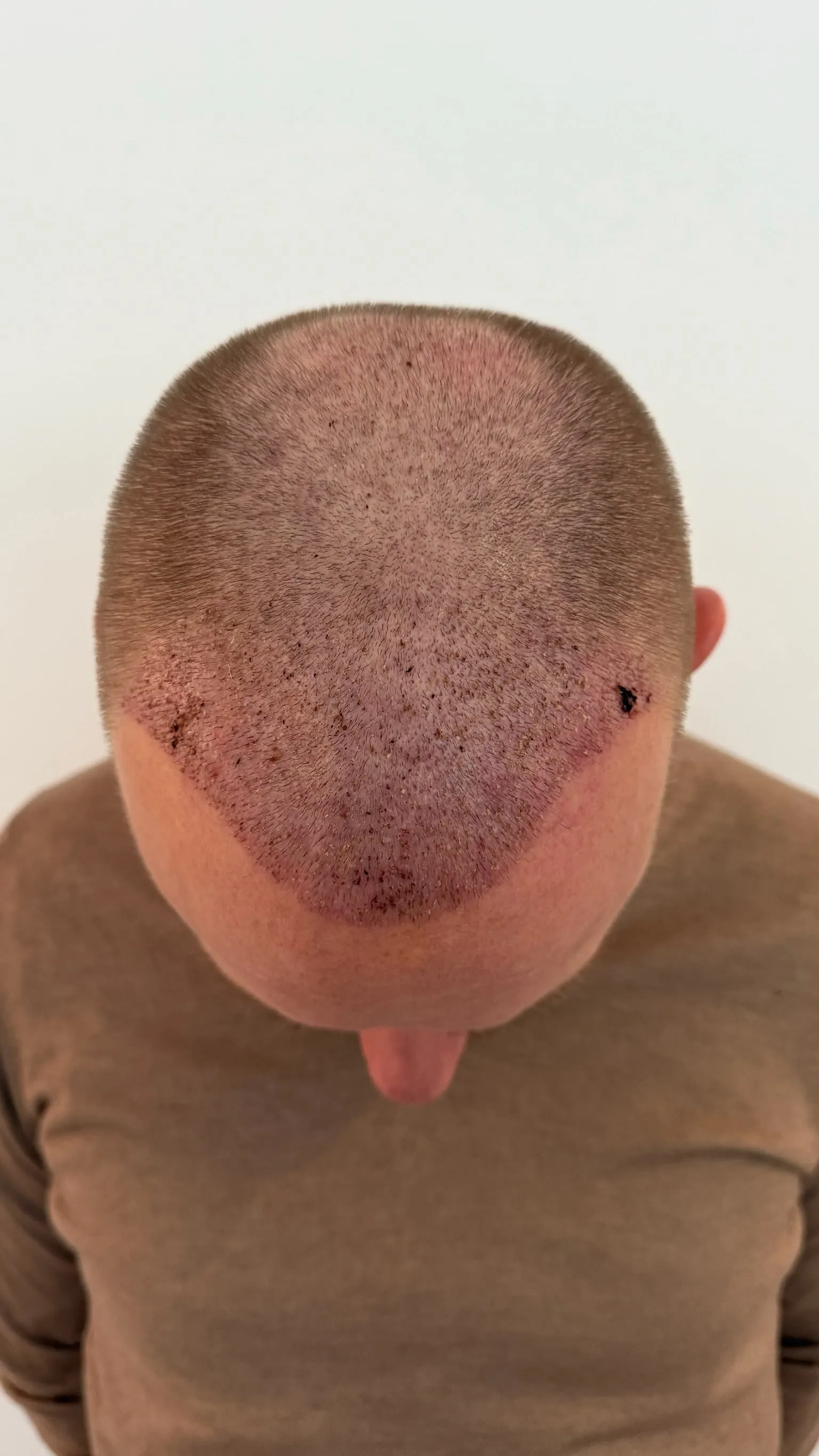 Day 7
Day 7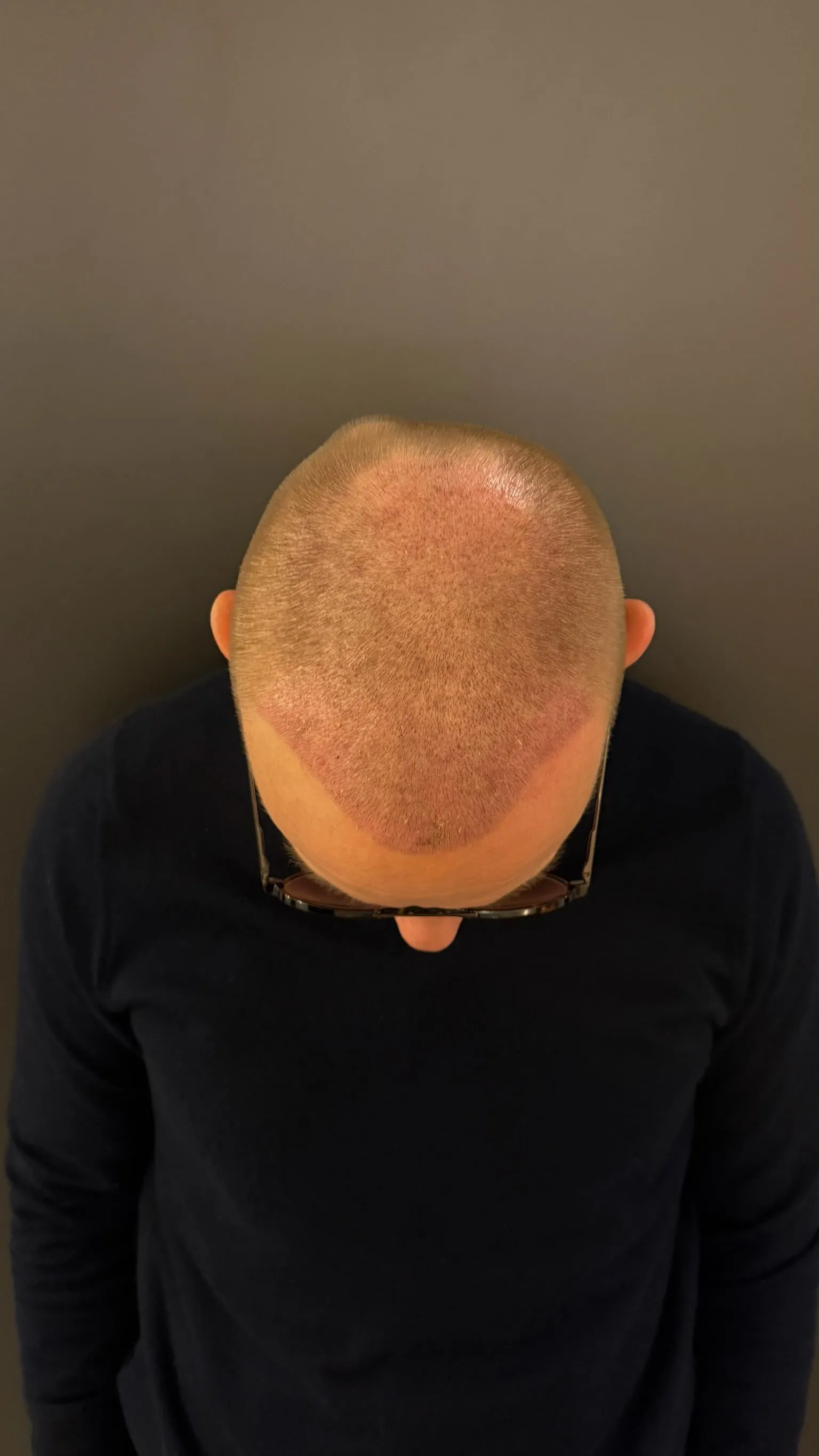 Day 8
Day 8
Weeks 2–6: the most difficult in-between phase psychologically
During this time, many people experience the so-called “shedding” effect: transplanted hairs fall out, even though the roots remain in the skin. This can be unsettling – but in many cases it is to be expected. Above all, it is important to use the right yardstick: you do not judge the result after three or six weeks.
Months 3–12: growth and maturing
From around the third month, many people start to see visible regrowth. Density, hair texture and growth direction develop over months. Aftercare is then less about “protection” and more about “support”.
What is normal after 7 and 14 days and after 3, 6 and 12 months, and what is behind shock loss, is explained in detail in the article Hair transplant timeline.
10 care tips after a hair transplant – and the reasons behind them
Tip 1
Hands off – and consistently so
The biggest danger in the first few days is rarely “too little care” but too much contact. Every touch of the scalp is a mechanical strain: nails, flakes of skin, friction. Get into the habit of not automatically reaching for your hairline in front of the mirror. If it itches, scratching is no solution – calm the cause instead (see tip 6).
A small everyday hack helps in practice: in situations where you would otherwise scratch without thinking (TV, laptop, phone), deliberately keep your hands busy – a water bottle, a stress ball or simply a pen.
Tip 2
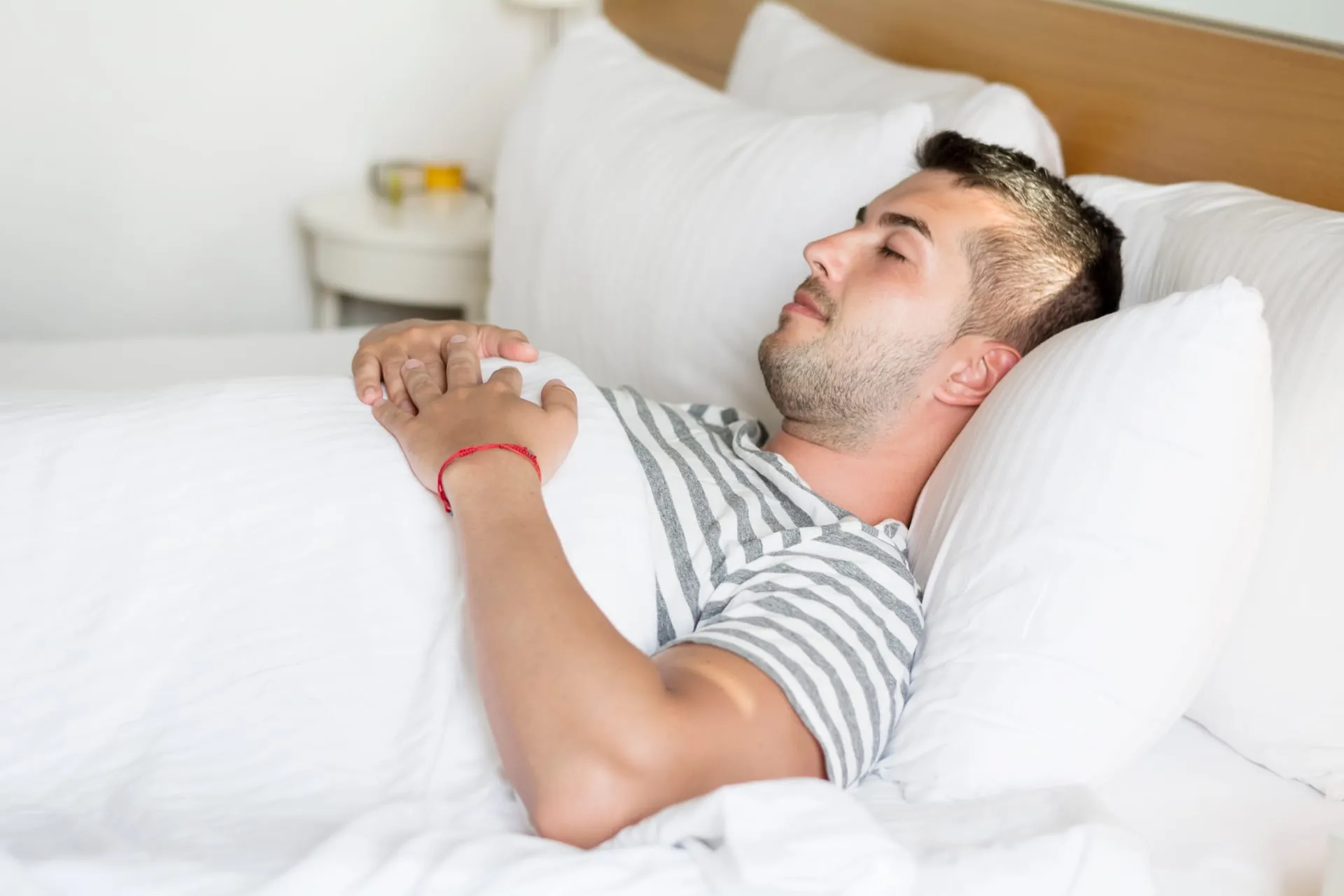
Sleep like a pro: head up, friction down
Sleep is healing time. At the same time, sleep is when you have the least control: you turn over, press your head into the pillow, rub without realising. The solution is not “sleep as little as possible” but to create sleeping conditions that protect your scalp.
A slightly raised upper body can help reduce swelling. A clean, smooth pillowcase is also important so that there is less friction. If you tend to roll onto your side by reflex, a neck pillow or a firm barrier at the side (e.g. a rolled-up towel) can help you keep the position.
Tip 3
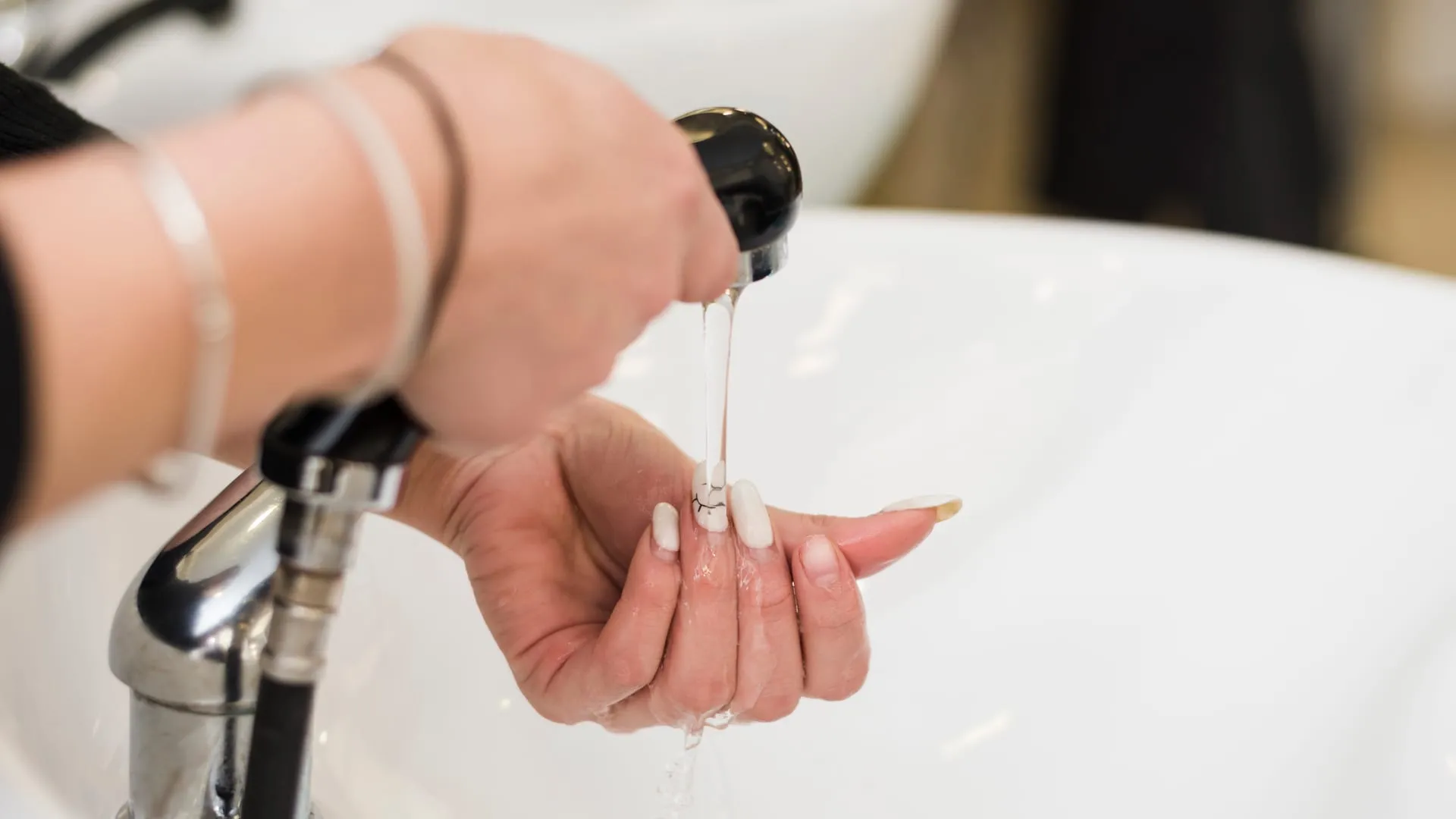
Washing: gentle, planned, no heroics
Many people underestimate how much damage “normal washing” can do. In the early phase you don’t need perfection – you need a gentle touch.
What usually works well: lukewarm water, gentle wetting, no strong jet directly on the recipient area and no rubbing with your fingertips. If scabs are to come away, that happens through soaking and patience – not through force.
Timing matters too: clinics usually specify a particular day on which to start washing. Stick to it. Too early is often an unnecessary risk; too late and scabs can harden.
Tip 4
Scabs: speed won’t win you anything
Scabs are a product of healing. They sometimes look unsightly and feel unfamiliar – but they are not “dirt” to be scrubbed away. If you pull scabs off too early, you risk not only skin irritation but, in the worst case, mechanical stress on freshly placed grafts.
Your aim is for them to come away gradually and in a controlled way as part of your washing routine. If you are unsure (“It’s stuck, but I want to get rid of it”), the right response is not more pressure but checking with your clinic.
Tip 5
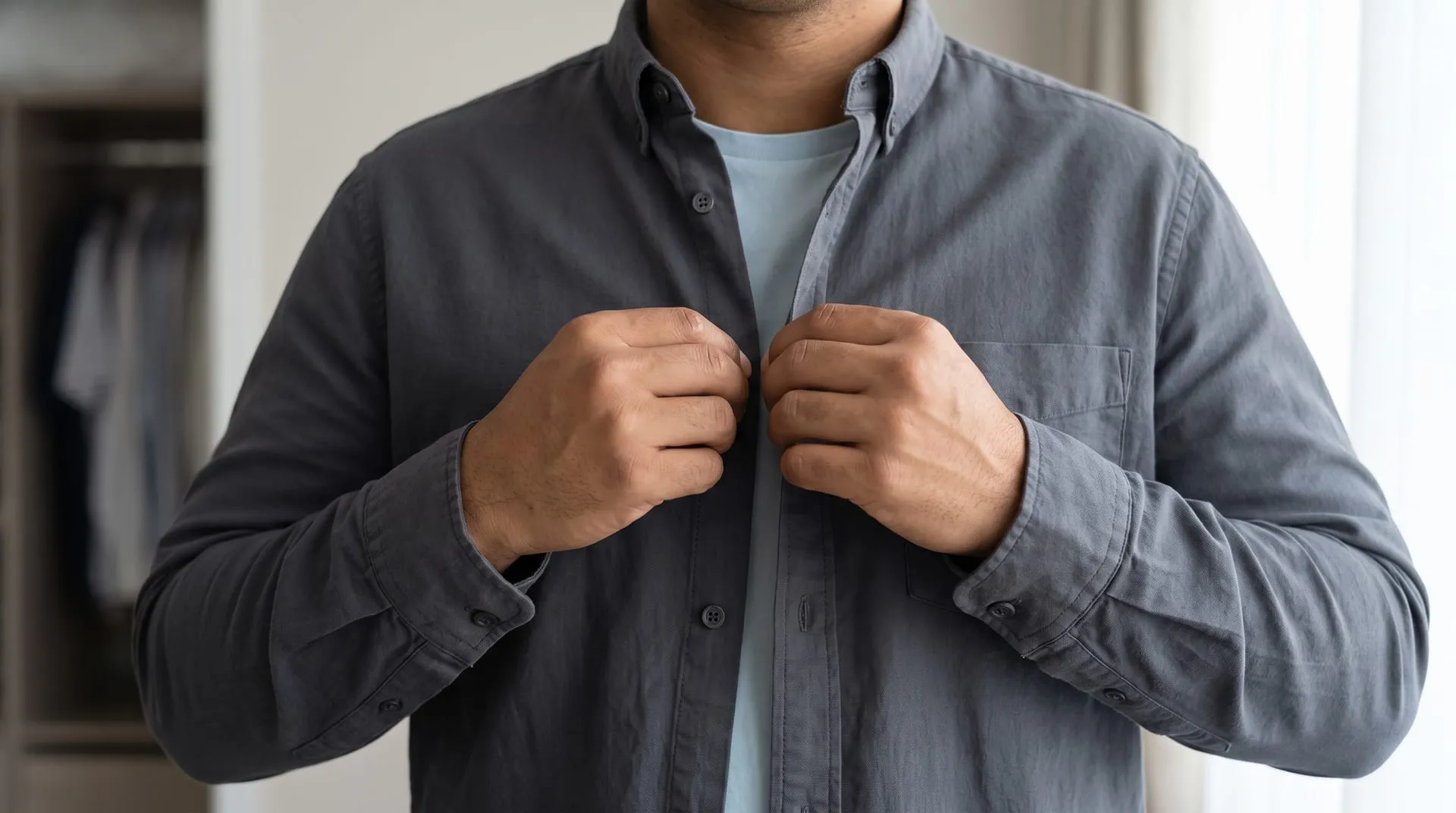
Clothing and everyday life: avoid the hidden traps
After surgery is not the time for tight jumpers, stiff collars or rushed changes of clothes. The classic: you pull off a hoodie, the fabric brushes across the front – and you only notice in the mirror.
In the first few days, choose clothing you can open at the front (shirt, jacket, zip). And if a head covering is allowed: only in the way you have been cleared to wear it – never tight, never chafing.
Tip 6
Itching is normal – but scratching is the wrong answer
Itching is often caused by dry, healing skin and the scab phase. Scratching feels good in the short term but is a direct attack on the healing process.
It is better to tackle the cause of the itching: with the washing and care routine you have been allowed, lukewarm water and rest. Sometimes a cool room and some distraction simply help. If the itching becomes very strong or you notice marked redness, warmth and throbbing pain, that is a signal to take a closer look (see the section on warning signs).
Tip 7
Sport, sauna, sweating: your body is ready – your scalp isn’t yet
Sport is healthy. After a hair transplant, however, sport in the early phase mainly means sweat, pressure, a raised pulse and friction. That is rarely helpful.
Stick to what your clinic has cleared you to do. Even if you feel fit: the recipient area needs time to become stable. Contact sports, strength training with straining and held breath, swimming (germs/chlorine) and saunas (heat) are particularly risky. The aim is not “back as early as possible” but “back without a setback”.
Tip 8
Sun and UV: the underestimated risk
UV radiation is no joke for freshly healing skin. It can intensify irritation and encourage inflammatory reactions. That is why restraint makes sense, especially in the first few weeks.
If you have to go out: shade, distance from direct sun and only the type of head covering you have been cleared to wear. It is not about fear but about control. Sun is a stressor – and stressors add up.

Tip 9
Alcohol and nicotine: if you want to invest, start here
This tip seems unspectacular, but it is one of the most effective. Nicotine impairs blood flow to the skin – and in the healing phase, blood flow is not a luxury but a foundation. Alcohol can encourage inflammation and worsen the quality of your sleep.
If you are looking for a window in which going without has the greatest effect: the first weeks after surgery are exactly that window. You don’t have to give things up “for ever”. You are simply deciding whether to boost your healing or slow it down.
Tip 10
Reading results correctly: not every phase is a result
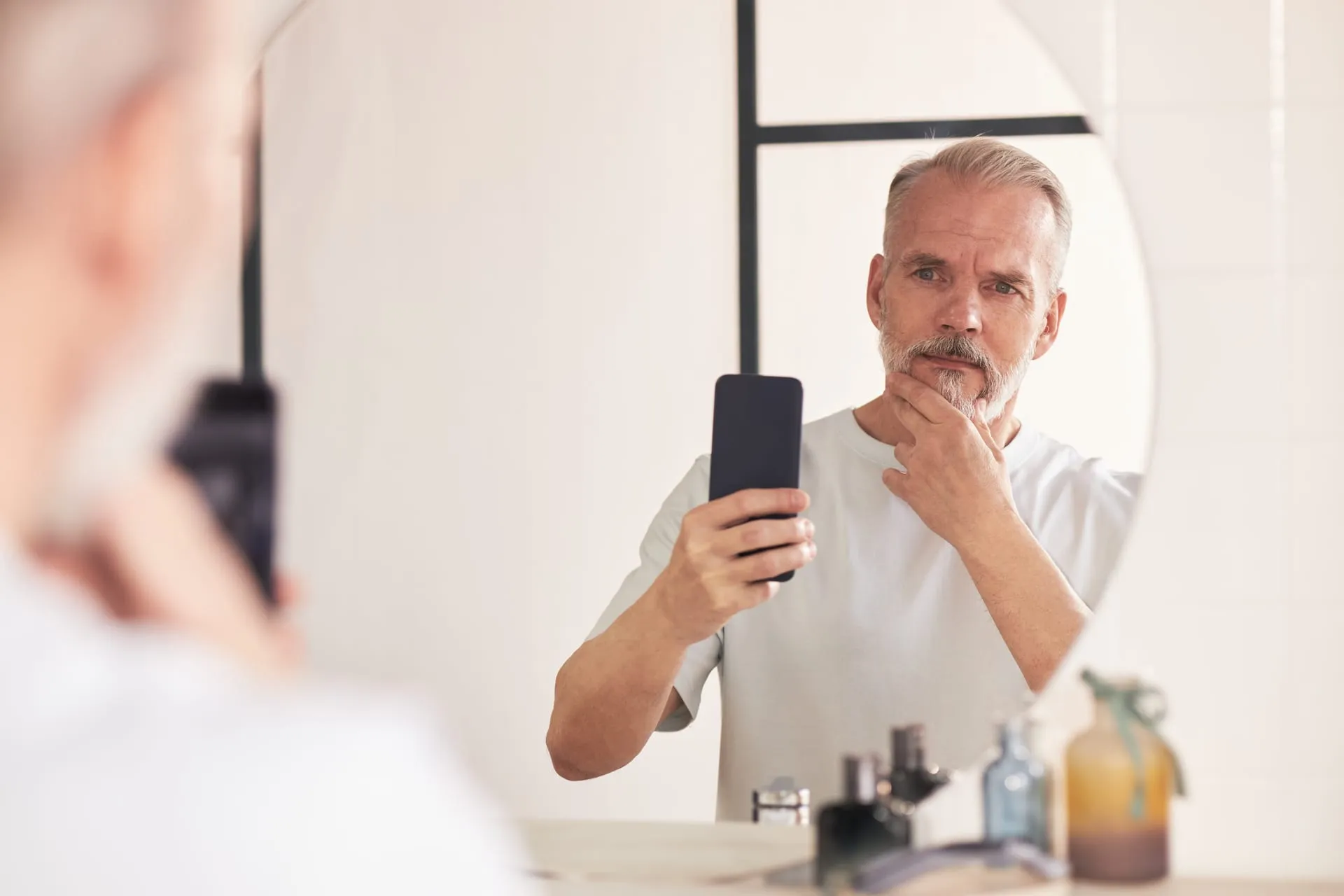
Many people drive themselves mad too early. A few weeks after surgery, the hair sometimes looks thinner than before – and for many, that is the hardest moment psychologically. The problem is then rarely the scalp. The problem is the yardstick of expectations.
Set yourself a realistic window for assessment: photos under the same conditions (light, angle, distance) make sense – but weeks and months apart, not every day. If you check every day, what you mainly see is fluctuation.
Everyday life after a hair transplant: the most common questions
Many questions only come up once you are at home. The short answers here give you some guidance; your clinic’s aftercare plan is what counts, because methods, healing and protocols differ. What is normal in which week and month is explained in the article Hair transplant timeline.
When can I wear a hat or cap again?
In the first few days, only the head covering your clinic gives you or expressly allows. After that, a loose-fitting cap or a wide hat is often possible – put it on and take it off carefully without brushing over the treated areas. Tight knitted hats and helmets press and chafe; they are only an option once your clinic has given the go-ahead.
How should I sleep after the hair transplant?
For the first few nights, ideally on your back with your upper body slightly raised: this can reduce swelling, and the treated areas do not rub against the pillow. A neck pillow of the kind used when travelling helps to keep your head still and stops you rolling onto your side; a clean, smooth pillowcase reduces friction (see tip 2). Your clinic will tell you how long and in which position you should sleep like this – it also depends on the method.
When is sport allowed again?
Light exercise such as walking is often possible sooner than training. Sport that makes you sweat, strength training with straining and contact sports put strain on the scalp through pulse, pressure and sweat (see tip 7). As a guide, the comparison of FUE and FUT gives about two to three weeks after single-graft extraction (FUE) and three to four weeks after the strip method (FUT). Your clinic decides the exact timing.
When can I go back to the sauna?
Heat and sweat irritate the healing scalp. Avoid the sauna for at least two weeks, often for several weeks; the same applies to sunbeds. Your clinic decides when it is possible again, based on how well you are healing.
Can I drink alcohol after the hair transplant?
In the first few weeks you should largely avoid alcohol: it can encourage inflammation and worsen your sleep (see tip 9). If you are taking medication after the procedure, also ask whether alcohol is compatible with it.
Is coffee allowed after the hair transplant?
There is no generally applicable guideline for coffee. Whether and from when you may drink coffee or other caffeinated drinks depends on your clinic’s instructions – ask if in doubt, especially if you are taking medication.
How do I protect my scalp from the sun?
Avoid direct sun for at least two weeks, often for several weeks, because UV radiation can irritate the healing skin (see tip 8). Stay in the shade and, if allowed, wear a loose-fitting head covering. Use sun cream on the freshly treated scalp only if your clinic allows it.
When can I go swimming again?
Not in the first few weeks: chlorine and germs in the pool, a lake or the sea are an unnecessary risk for the healing scalp (see tip 7). Your clinic decides when swimming is fine again.
Do I have to stop smoking?
Yes, if at all possible, especially in the first weeks after the procedure. Nicotine impairs blood flow to the skin, and the scalp needs that blood flow to heal (see tip 9). This also applies to other products containing nicotine. Your clinic will tell you during preparation how long before the operation you should already stop.
When can I drive again?
Not on the day of the procedure: arrange for someone to accompany you home or take a taxi. After that, only once you feel confident and are not taking any medication that could affect your ability to drive – if in doubt, ask your clinic. Also make sure the headrest does not press on freshly treated areas.

How often can I wash my hair?
As often as your aftercare plan says. The first gentle wash may already be due on the day after the procedure. In the first two weeks, wash as instructed and with the products your clinic recommends: lukewarm, without a hard jet, without rubbing, only soaking the scabs (see tip 3). You return to your usual routine gradually once the scalp has healed.
The most common mistakes – and why they happen
Most mistakes come from two motives: impatience and habit. Impatience leads to “I’ll give it a thorough clean now” or “I’m going back to training already”. Habit leads to touching, scratching, hot showers or quickly pulling on a hat.
If you remember only one thing: aftercare is less about action and more about avoidance. You are protecting a fresh biological environment rather than trying to “optimise” it with activity.
Warning signs: when you should not wait
A little redness, slight swelling and a feeling of tightness can be normal. But there are signals where you should not experiment. These include above all:
- Increasing, throbbing pain instead of easing
- Strong warmth, redness that clearly spreads
- Weeping, pus-like discharge or an unpleasant smell
- Fever or feeling very unwell
- Sudden, severe swelling
These are not DIY situations. Contact the practice that operated on you.
Questions about aftercare or healing after a hair transplant?
The period after a hair transplant often raises uncertainties – about healing, care or how the result will develop over time. At Hair Doctors we support you with experience and medical clarity and give you an individual assessment of your current situation – for confidence throughout the process and a result that works in the long term.
FAQ on hair transplant aftercare
When can I wash my hair “normally” again?
“Normal” is a process, not a date. In the early phase, you wash according to protocol: gently, without rubbing. When you can wash as usual again depends on how you heal and on your clinic’s plan. What matters is that you only return to your routine once your scalp is no longer in the sensitive scab and irritation phase.
When do the scabs fall off?
Scabs usually come away gradually, not all at once. Gently soaking and washing according to plan is the right way. Force is the wrong approach.
Is it bad if transplanted hairs fall out after a few weeks?
Often not. Many people go through a phase in which hairs fall out while the roots stay in the skin. This can feel like a setback, but in many cases it is part of the adjustment.
Can I wear a hat?
Only if you have been given the go-ahead – and then please without pressure or chafing. The risk lies less in the hat itself than in friction and pressure on freshly healing areas.
What can I do if it itches a lot?
Please don’t scratch. Support your skin with the care and washing routine you have been allowed and watch whether redness, warmth or pain develops. If so, better to have it checked early.
When can I do sport again?
That depends a great deal on what you mean by sport. Light exercise is often possible sooner than intensive training, swimming or contact sports. Follow your clinic’s plan – especially when you start again.
How should I sleep after a hair transplant?
For the first few nights, ideally on your back with your upper body slightly raised, so that swelling can go down and the treated areas do not rub against the pillow. A neck pillow helps you keep the position. Your clinic will tell you how long this is necessary.
When can I use a sauna after a hair transplant?
After two weeks at the earliest, often only after several weeks. Heat and sweat irritate the healing scalp. What counts is your clinic’s go-ahead.
Can I drink alcohol after a hair transplant?
In the first few weeks you should largely avoid alcohol, because it can encourage inflammation and worsen your sleep. If you are taking medication, also check whether alcohol is compatible with it.
Can I drink coffee after a hair transplant?
There is no generally applicable guideline for this. Follow your clinic’s instructions and ask if in doubt, especially if you are taking medication after the procedure.
Conclusion: good aftercare is unspectacular – and that is exactly why it works so well
The best results rarely come from “doing more”. They come from disturbing less: less friction, less heat, fewer stressors. If you play the first few weeks calmly, you give the grafts the best conditions to anchor themselves and grow reliably later on.
If you are unsure whether a symptom is normal or whether you have made a mistake: don’t wait for a gut feeling. Get some quick feedback from the practice. A proper check often saves days of worrying – and sometimes real trouble.
Personal aftercare & planning with Hair Doctors
If you want to plan your hair transplant professionally – including clear aftercare instructions and realistic expectations – Hair Doctors is the right place to come. Make a consultation appointment now and have your situation (hair loss pattern, donor area, desired result) assessed in a structured way.
Medical note:This article is for general information only and does not replace a medical examination, diagnosis or consultation. Whether a treatment is suitable for you, and which one, should be discussed in person with a specialist. Treatment results vary from person to person.
Safety & quality at Hair Doctors
See our commitment for yourself


Reviews
Patient reviews of our premium partner clinics in Dortmund, Düsseldorf, Hamburg, Nuremberg, Wertheim and Eindhoven (NL):
 Hair DoctorsVerified5,913 reviews on provenexpert.comProud member of the CGCE Group. Read here what real patients of Hair Doctors and the CGCE Group say about us.
Personal 1:1 consultation, no obligation
In person or conveniently by video.
In two consultations we work out with you which treatment suits you.