

Blog · 30 September 2026 · 8 min read
Hair transplant timeline: what is normal after days, weeks and months
First scabs, then hair falls out, and after three months there is often still little to see: after a hair transplant, many people wonder whether their progress is normal. Here you can read what is typical in which phase, which warning signs matter and why the result can only be judged after many months.
Medically reviewed by Dr. med. Martin Reifenrath, Specialist in Plastic and Aesthetic Surgery · Last updated:
Key points at a glance
- In the first few days, swelling, a feeling of tightness and small scabs are common; the scabs usually come away within ten days.
- A few weeks after the procedure, many transplanted hairs fall out; the roots remain in the skin. Your own hair can also fall out temporarily (shock loss).
- New hair usually appears from the third to fourth month, fine at first.
- The result can be judged after about ten to twelve months at the earliest, sometimes only after up to 18 months – this varies from person to person.
- Increasing pain, spreading redness, pus or fever are warning signs: if you notice them, call your clinic.
- Hereditary hair loss can continue in untreated areas, even years after the procedure.
This article is about the timeline. What you can do yourself to help healing, from washing your hair to sleeping, is covered in the article on aftercare after a hair transplant.
How long does it take for hair to grow after a hair transplant?
Longer than most people expect. After a few weeks, the transplanted hair roots shed their hair shafts and rest before forming new hairs. The UK’s National Health Service (NHS) gives this as a guide: new hair usually appears after about four months, and the full result after 10 to 18 months.
How it goes for you depends, among other things, on the method, the number of grafts (the transplanted groups of hair roots), your hair texture and how you heal.
Days 1 to 3: swelling, tightness and the first scabs
Immediately after the procedure, the scalp is red and sensitive; mild pain, a feeling of tightness and swelling are common. The swelling often starts at the forehead and can sink down to the eyelids and nose. According to a review of complications of hair transplantation, it usually lasts three to five days.
Tiny scabs form around the grafts – a normal part of wound healing. Because the grafts are not yet firmly anchored, you should avoid pressure, friction and scratching. Pain that increases instead of easing and bleeding that does not stop are not normal.
Days 4 to 14: the scabs come away
7 days after the hair transplant
After a week, the swelling has usually gone down. The scabs gradually come away during gentle hair washing; the German Society for Aesthetic Plastic Surgery (DGÄPC) gives about two to ten days for this. If individual hairs come away with them, the society says this is no cause for concern: the transplanted roots are preserved.
14 days after the hair transplant
After two weeks, the surface of the scalp has usually healed; slight redness can remain visible for longer, especially on fair skin. With the strip method (FUT), in which the grafts are obtained from a narrow strip of skin, non-dissolving stitches are usually removed after ten days to three weeks. For returning to work, the NHS gives one to two weeks. How the strip method and single-graft extraction (FUE) differ in this respect is shown in the comparison of FUE and FUT.
Weeks 2 to 8: shedding and shock loss
This phase unsettles many people the most, because the hair often looks thinner now. Two different processes are behind this.
3 weeks after the hair transplant: the transplanted hairs fall out
A few weeks after the procedure, many transplanted hairs fall out. Experts call this shedding – the hair shafts are cast off. The roots remain in the skin, rest and later form new hairs. The NHS describes this hair loss as common.
What is shock loss after a hair transplant?
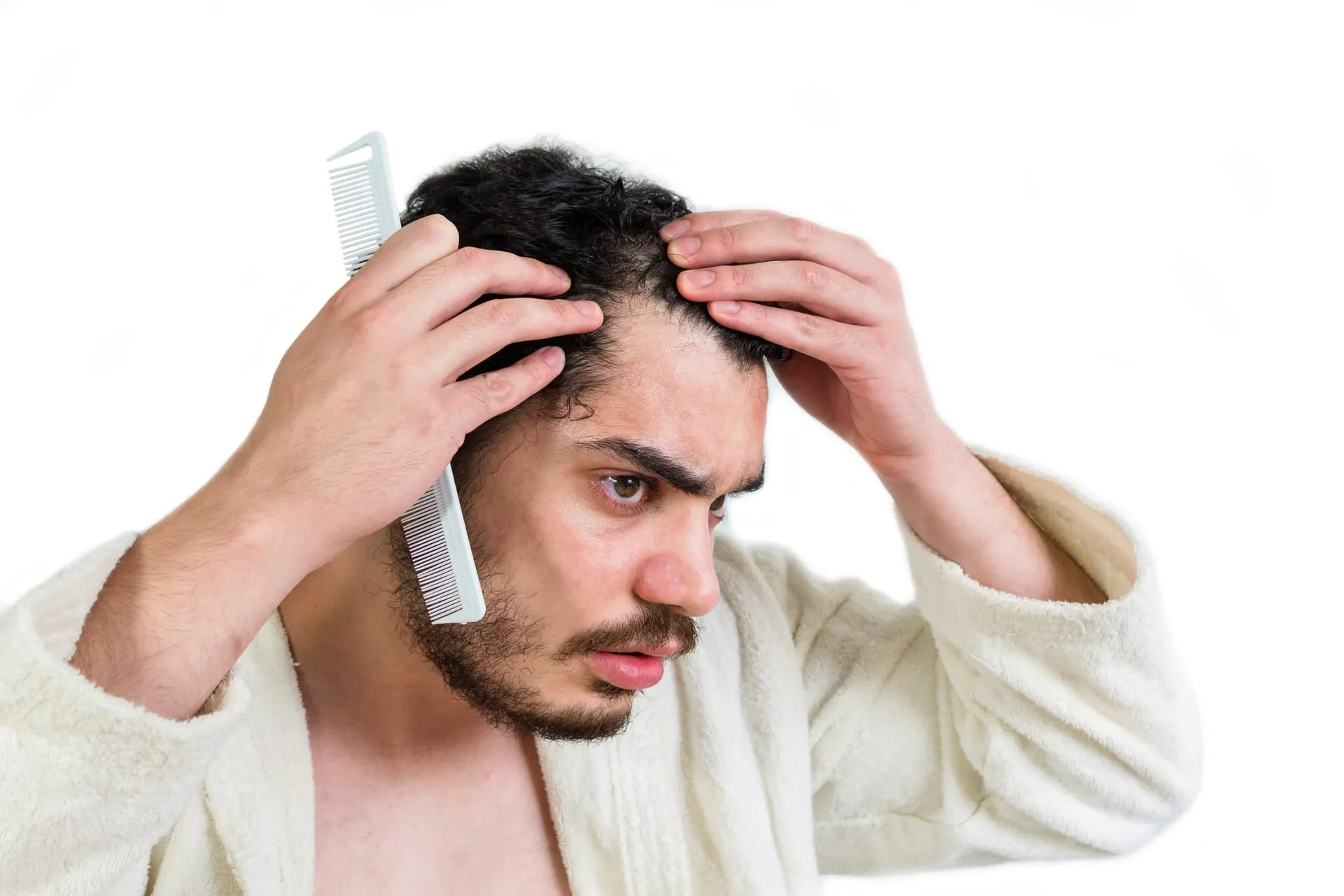
Shock loss is the loss of your own, non-transplanted hair in the treated area or around the donor site as a reaction to the procedure. According to the review by Kerure and Patwardhan, in the treated area it typically begins two to six weeks after the operation and affects, to varying degrees, most people who still have their own hair there. Women and people whose hair has already become noticeably finer are affected more often.
Shock loss is usually temporary, but in some cases a permanent reduction in your own hair remains. According to the same review, the hair around the donor site almost always recovers within three to four months. Raise this risk at your consultation before the procedure.
Months 2 to 4: resting phase and the first new hairs
Hair transplant after 2 months
After two months, there is often hardly anything to see in the treated area: the hair roots are resting, a normal part of the hair cycle. For many people, this is a test of patience.
Hair transplant after 3 months
From around the third month, the first new hairs start to grow for many people, as the German Society for Aesthetic Plastic Surgery also describes. They are fine at first and do not all grow at the same time; little growth after three months is therefore often within the normal range. Show your clinic any pimple-like inflammation at the hair roots (folliculitis) – promptly if it gets worse, hurts or contains pus.
Hair transplant after 4 months
According to the NHS, new hair usually appears after about four months. Some people can already see clear growth by then, others still very little; both can be normal. The new hairs are still short and become longer and stronger over the following months.
Hair transplant after 6 months: visible, but not finished
After six months, many people can see considerably more new hair, but the process is not finished: the hairs continue to grow longer and stronger, and density develops over months. This is a good time to discuss any open questions with your clinic, for example if one area is clearly lagging behind.

Months 9 to 12: the hair becomes stronger
The length and thickness of the new hairs now continue to increase, and the progress becomes easier to assess. A final assessment makes sense after about ten to twelve months at the earliest.
After 12 to 18 months: the final result
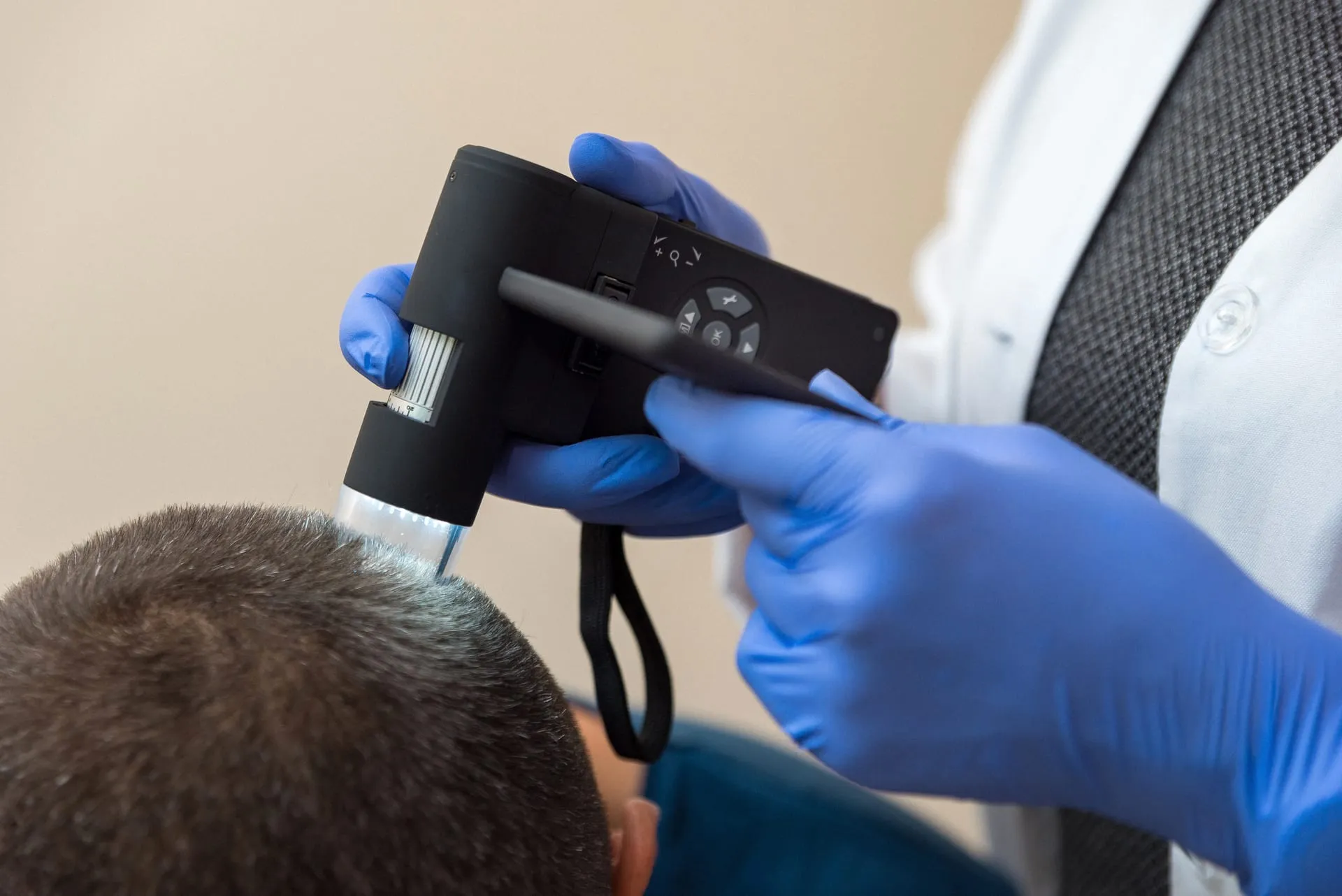
The result can often be judged well after about twelve months; because some hairs take longer to mature, the NHS gives 10 to 18 months for the full result. How dense it turns out varies from person to person and depends, among other things, on the number of grafts and your hair quality – more on this in the article How many grafts do I need?
2 years after the hair transplant: why further hair loss is possible
If the hair becomes thinner again one or two years after the procedure, this usually affects not the transplanted hair but your own hair next to it. One important reason: hereditary hair loss (androgenetic alopecia) progresses, as described by the International Society of Hair Restoration Surgery (ISHRS).
The transplanted hairs come from the fringe of hair at the back of the head. These roots are less sensitive to dihydrotestosterone, a product of testosterone that drives hereditary hair loss, and they keep this property after being transplanted. The original hairs in the treated area do not have this protection; the NHS also points out that the hair around the transplant can continue to thin.
Especially in young men, it is hard to predict how much more hair will be lost; the ISHRS stresses that planning must take future hair loss into account. Drug treatment prescribed by a dermatologist can slow it down. More on this under Hair loss in men and Hair loss in women. Sudden hair loss can also have other causes, such as hormonal changes, a nutrient deficiency or alopecia areata (patchy hair loss), and should be checked by a doctor.
Warning signs: when you should call your clinic
Redness, a feeling of tightness, scabs and itching are common at first. Contact your clinic promptly, however, if you have:
- pain that gets worse instead of easing, or very severe pain
- spreading redness, warmth or a tense, painful swelling in one spot
- pus, weeping areas or several pus-filled spots
- fever or feeling very unwell
- bleeding that does not stop
- swelling that has not gone down after about five days or suddenly gets much worse

The NHS advises contacting the clinic that treated you as soon as possible if you have severe pain or unexpected symptoms. Photos help when you get in touch but do not replace an examination.
Emergency: if you have difficulty breathing, chest pain, impaired consciousness, swelling of the tongue or throat, or rapid deterioration, call the emergency number 112 immediately.
An honest assessment: every course is different
The timings given here are guidelines. Your progress can be faster or slower without anything being wrong; results vary from person to person, and nobody can guarantee a particular density.
A hair transplant is a surgical procedure with risks. The NHS lists, among others, bleeding, infection, allergic reactions to the anaesthetic, visible scars and transplanted hairs failing to take. According to Kerure and Patwardhan, infections are rare; shock loss can be permanent in individual cases.
And: a hair transplant redistributes existing hair; it does not stop hereditary hair loss. What you can do yourself to help healing is explained in the article on aftercare.
Questions about the healing process or a planned hair transplant?
If you are planning a hair transplant, we discuss in a 1:1 consultation with no obligation what course is realistic for your starting point and which method is an option – in person at six locations (Dortmund, Düsseldorf, Hamburg, Nuremberg, Wertheim, Eindhoven) or by video. We also clarify which method is available at which location.
Aftercare and check-ups are included in the treatment price (costs and prices); after about ten to twelve months we will get in touch to arrange a follow-up appointment.
Frequently asked questions
How long does it take for hair to grow after a hair transplant?
The first new hairs usually appear from the third to fourth month. Before that, many transplanted hairs fall out while the roots rest. The full result can be seen after about 10 to 18 months – this varies from person to person.
What is normal 7 days after the hair transplant?
The swelling has usually gone down, the scalp is often still red, and the scabs are gradually coming away. If individual hairs come away with them, the transplanted roots still remain in the skin. Please do not scratch off the scabs.
Is shock loss after a hair transplant permanent?
Usually not. The loss of your own, non-transplanted hair after the procedure is generally temporary. In individual cases, however, a permanent reduction in your own hair can remain.
Why can I hardly see any new hair 3 months after the hair transplant?
Because the hair roots initially rest after the hair shafts have fallen out. The first new hairs often only appear from the third to fourth month and are fine at first. Little growth after three months is therefore often within the normal range.
Why am I losing hair again 2 years after the hair transplant?
Usually it is your own hair in the surrounding area that is falling out, because hereditary hair loss is progressing; the transplanted hairs from the fringe at the back of the head are less sensitive to this. Have new hair loss checked by a doctor, also because other causes are possible.
When should I call the clinic after a hair transplant?
If you have increasing or very severe pain, spreading redness, warmth, pus, fever, bleeding that does not stop, or other unexpected symptoms. If you have difficulty breathing, chest pain or impaired consciousness, call the emergency number 112 immediately.
Medical note:This article is for general information only and does not replace a medical examination, diagnosis or consultation. Whether a treatment is suitable for you, and which one, should be discussed in person with a specialist. Treatment results vary from person to person.
Show sources (5)
- NHS (2023): Hair transplant. Nationaler Gesundheitsdienst Großbritanniens, zuletzt geprüft am 29. September 2023. www.nhs.uk/conditions/cosmetic-procedures/hair-transplant
- Deutsche Gesellschaft für Ästhetisch-Plastische Chirurgie (DGÄPC): Haartransplantation. Patientenratgeber, ohne Datumsangabe, abgerufen am 30. September 2026. www.dgaepc.de/aesthetisch-plastische-chirurgie/haut/haartransplantation
- Kerure AS, Patwardhan N (2018): Complications in Hair Transplantation. Journal of Cutaneous and Aesthetic Surgery 11(4): 182–189. doi:10.4103/JCAS.JCAS_125_18. pmc.ncbi.nlm.nih.gov/articles/PMC6371733
- International Society of Hair Restoration Surgery (ISHRS): Androgenetic Alopecia – A Guide to Pattern Hair Loss. Abgerufen am 30. September 2026. ishrs.org/androgenetic-alopecia
- International Society of Hair Restoration Surgery (ISHRS) (2023): Expectations and Decision-Making in Hair Restoration Surgery. ishrs.org/expectations-and-decision-making-in-hair-restoration-surgery
Personal 1:1 consultation, no obligation
In person or conveniently by video.
In two consultations we work out with you which treatment suits you.