
Blog · 6 March 2020
State-of-the-art FU techniques for the best results in hair transplantation
Hair Doctors sets standards in innovation and precision
In modern hair transplant medicine, almost exclusively the two superior techniques known as FU procedures are used today. FU stands for follicular unit and expresses the greatest possible precision in harvesting and further processing (preparing) the hair follicles obtained from your own hair.
In both techniques, modern medicine makes use of the finding that hair follicles can be harvested from the donor area at the back of the head, which is affected little or not at all by hereditary hair loss, and redistributed by reinserting them into the bald areas affected by hair loss (recipient area).
Unlike earlier methods, the special feature of the FU techniques is that hair can be harvested in its natural size, the so-called follicular units or hair follicles. Because, contrary to popular belief, hair does not grow singly from one hair root, but in small groups of 1 to usually 4 hairs. The aim of this is, on the one hand, to achieve the best possible level of detail and as natural an appearance as possible. On the other hand, the hair is to be transplanted to the new areas as gently and undamaged as possible, for a high growth rate.
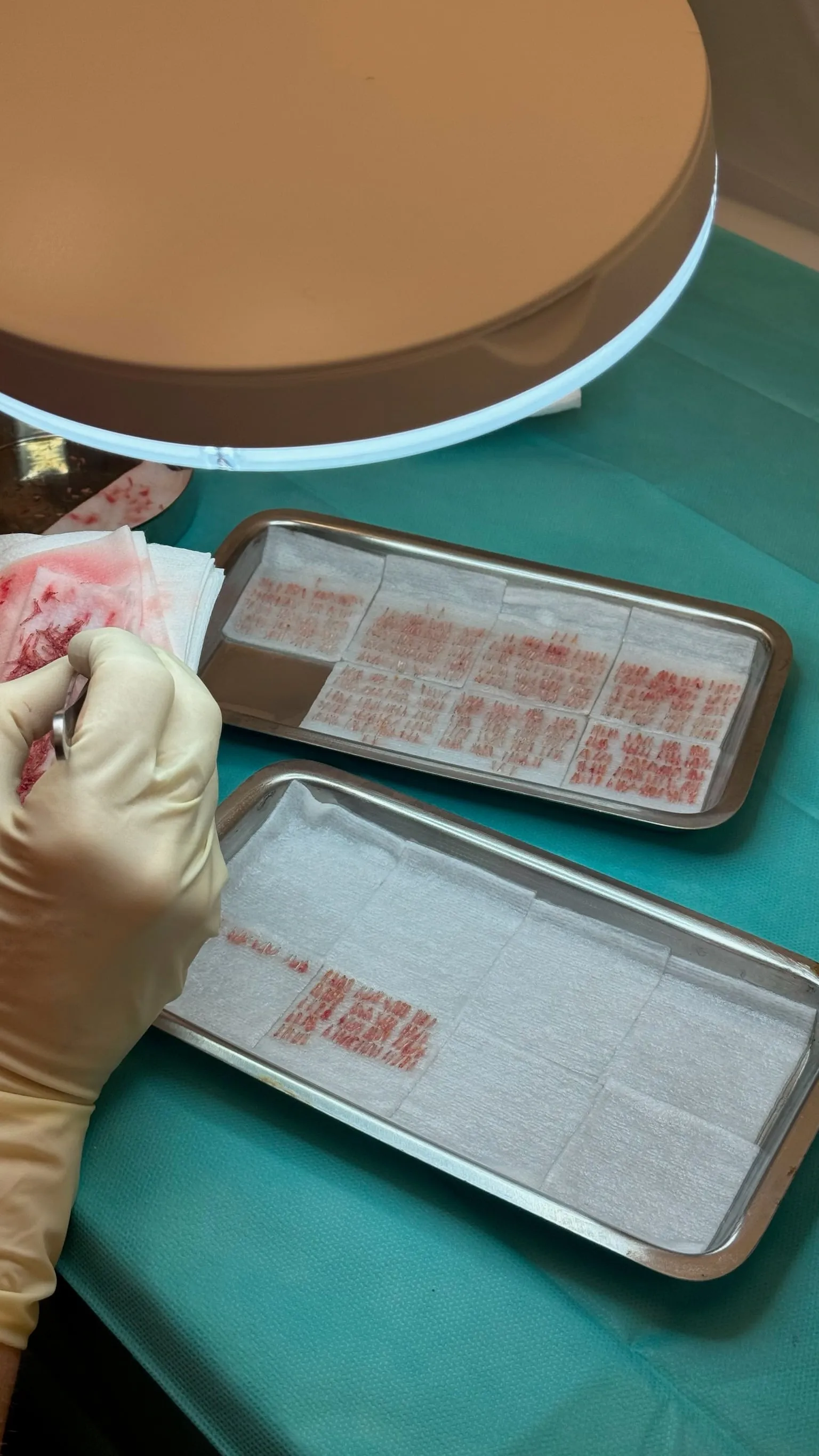
Find out more about FUE hair transplants here.
How does a hair transplant at Hair Doctors actually work?
Using the finest scalpels or needles, the surgeon makes tiny puncture channels (known as “slits”) in the scalp, which determine the later direction of hair growth. The width of the blade or needle – between 0.5 and 1.0 mm – is adapted to the width of the patient’s individual hair grafts. The depth of the punctures – between 3 and 6 mm – is matched to the length of the respective hair root. Because the puncture channel is exactly the same size as the corresponding hair graft, the smallest possible wound is created and therefore, later on, the smallest possible scar. Finally, the specially trained hair technicians place the individual grafts into the slits provided for them using fine jeweller’s forceps. During this process, the grafts must always be kept moist; the hair root may only be touched at certain points and only a few times, in order to protect the growth zones.
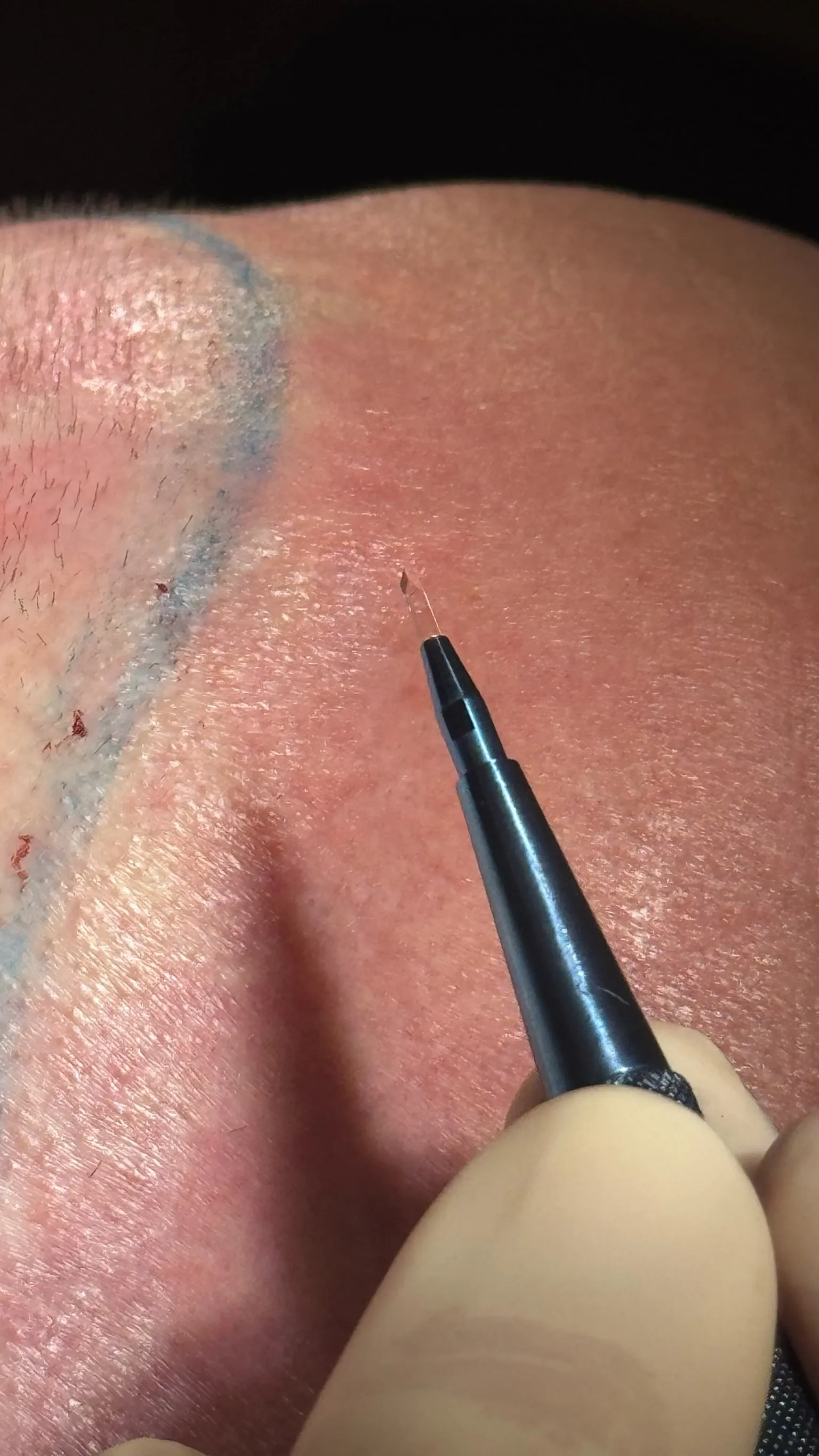
What happens after my hair transplant? Is aftercare at Hair Doctors also ensured?
If you wish, we will welcome you to our hair clinic on the day after your hair transplant to check the first result of your hair transplant. However, you can easily and comfortably carry out the first hair wash after the treatment yourself at home, following detailed instructions from our hair assistants. For this, our hair team will give you written instructions on washing your hair for the first days after the hair transplant.
Swelling can occur after a hair transplant, but subsides on its own after a few days. The headband you are given prevents swelling from sinking down to the area around your eyes. With small to medium-sized hair transplants, swelling is comparatively rare.
Small crusts have usually come off after 7 to 10 days, and the scalp has healed so well that no traces of the hair transplant are visible any more. Only slightly reddened skin in the treated areas may remain for up to 3 weeks after a hair transplant. You should never remove these crusts by force by scratching. Your personal Hair Doctors hair adviser can give you medical tips on removing the scab and on faster healing should the crusts actually remain on your scalp for longer than 10 days.
For the first 2 weeks, the hair is washed and cared for according to our instructions and with the shampoos and lotions we provide. Until the 4th day after your hair transplant, you should wear a head covering provided by us; after that, you can switch to a hat or a loose-fitting cap of your choice.
Direct, strong sunlight, saunas and sunbeds should be off limits for you for several weeks. In the first weeks after the hair transplant, also avoid swimming or doing sports such as football or strength training.
Within the following 3 to 4 weeks, typically around 90% of the transplanted hairs fall out again, which should not worry you in any way. Because 3 to 6 months after your hair transplant at the latest, new growth begins from the hair roots that have remained in place and are now reactivated.
The final result of the hair transplant can be expected after 12 months. Your personal Hair Doctors hair adviser will therefore contact you again 10–12 months after your hair transplant to arrange a follow-up appointment for the final assessment of the treatment result.
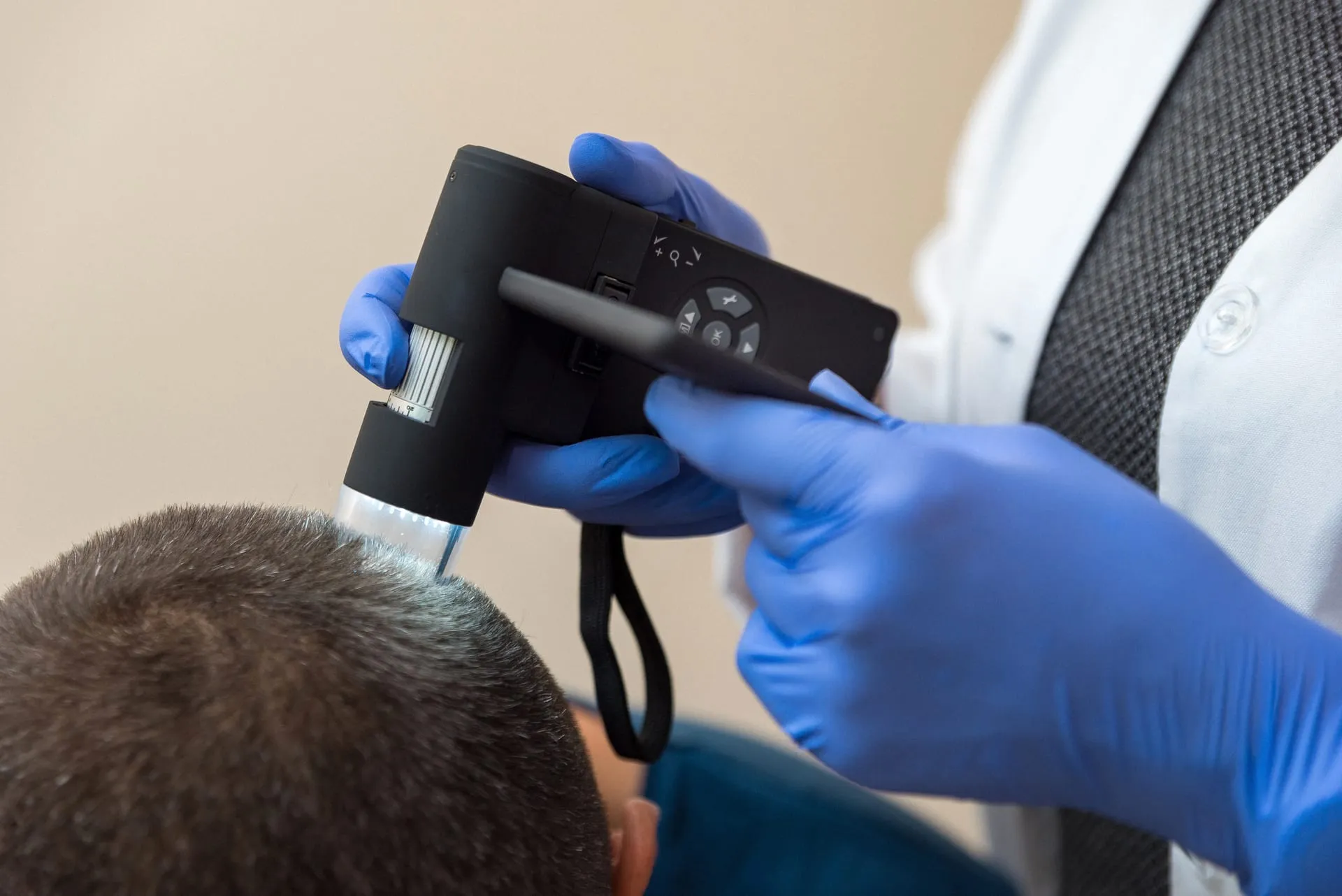
Medical note:This article is for general information only and does not replace a medical examination, diagnosis or consultation. Whether a treatment is suitable for you, and which one, should be discussed in person with a specialist. Treatment results vary from person to person.
Personal 1:1 consultation, no obligation
In person or conveniently by video.
In two consultations we work out with you which treatment suits you.