

Blog · 3 March 2026 · 11 min read
Hair transplant without shaving
Imagine coming back from holiday and simply looking rested – while your hairline quietly turns back the clock, without the question of shaving ever coming up.
Discretion without compromise: the key facts about unshaven hair transplants
- No buzz cut needed: unlike the classic method, the head is not fully shaved; instead, usually only tiny, strategically placed areas in the donor area are trimmed, and these are completely hidden by the existing top hair.
- Ideal for partial areas: the procedure is very well suited to correcting the hairline, filling in receding temples or moderate densification, because the surrounding hair stays long and better hides scabs and redness.
- Quality through extra effort: the unshaven technique is considerably more time-consuming and technically demanding for the surgeon, which is why it often costs more, but it allows an almost seamless return to everyday working and social life.
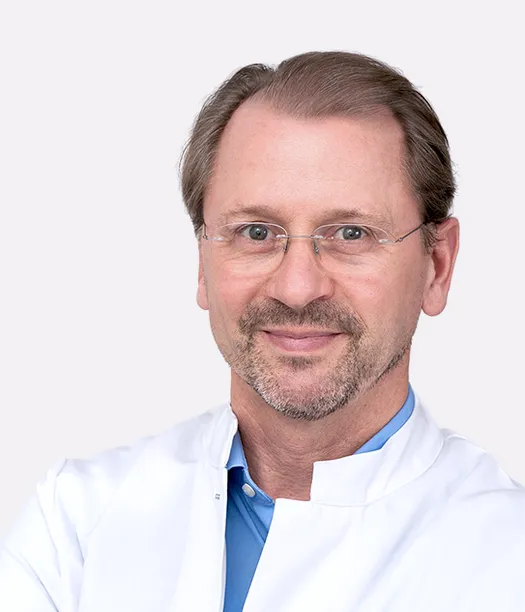
“True discretion is no coincidence but the result of surgical choreography. With an unshaven hair transplant, we do not work against the patient’s hairstyle but use it as a natural shield, so that the new growth can establish itself almost invisibly.”
Hair transplant without shaving: how the discreet procedure works
Many people want their hair back – but without everyone noticing straight away. This is exactly where the hair transplant without shaving comes in. In practice, this almost never means “0 millimetres everywhere” but a discreet approach: no full shave, often only small, hidden trimmed areas in the donor area – or, depending on the technique, implantation between longer hairs.
In this article you will find out how an unshaven hair transplant really works, what variants there are, who it makes sense for – and where its limits lie. Clear, direct and without the marketing fog.

What does “hair transplant without shaving” really mean?
Anyone searching for “without shaving” soon comes across big promises. The reality is more nuanced – and that is exactly what protects you from false expectations.
In most cases, a hair transplant without shaving means:
- No complete shave of the head (so no full buzz cut).
- The recipient area (e.g. hairline or receding temples) usually stays visibly long.
- In the donor area there may still be small trimmed spots – placed so that they disappear under the top hair.
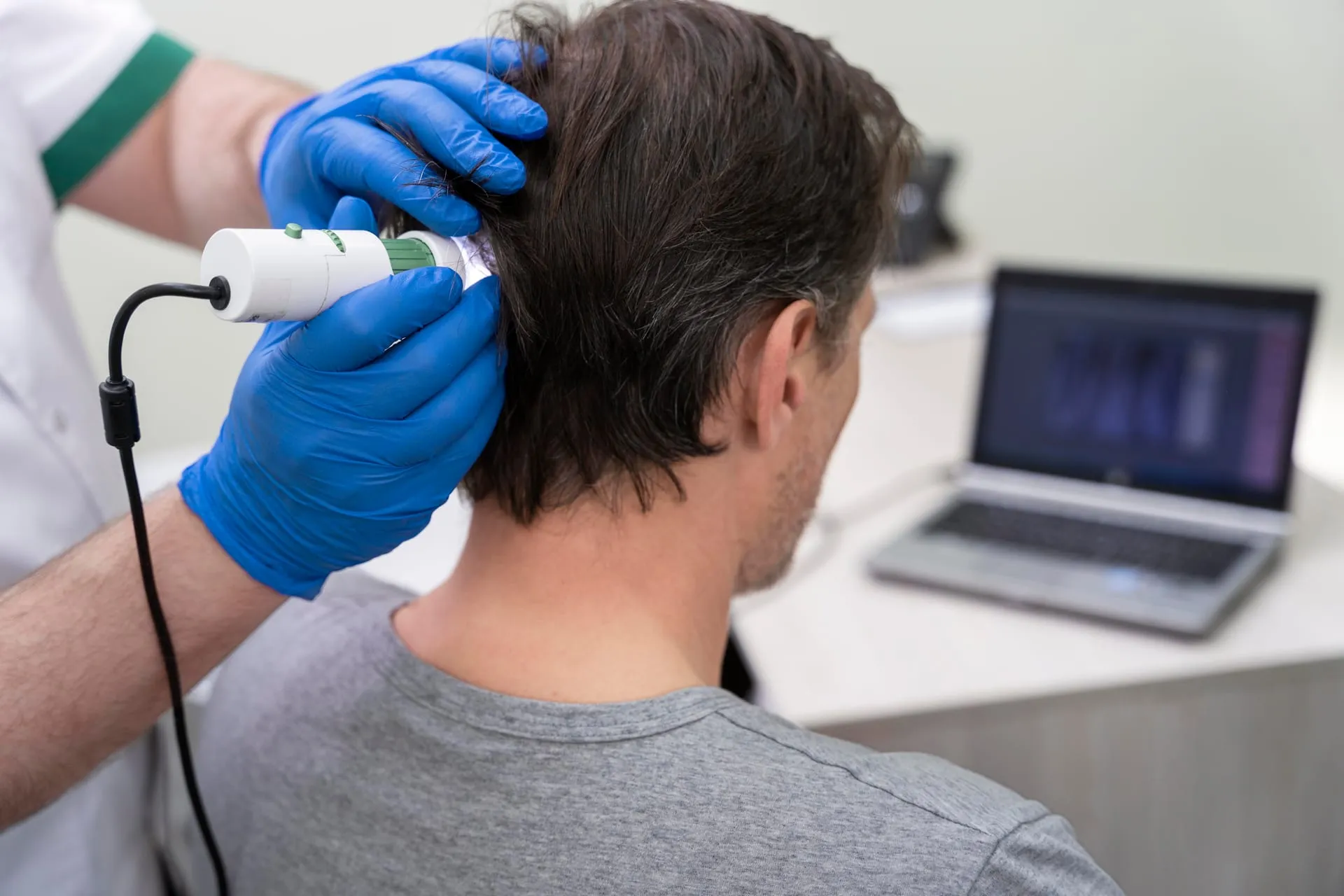
Why trim at all? Because extraction and implantation are precision work. Grafts have to be cleanly separated, protected, sorted and placed. Hair that gets in the way costs time – and time is not just a matter of comfort but a quality factor.
The second important distinction is:
- “Without a full shave” (most common): discreet, but with mini trims.
- “Completely unshaven” (less common): possible, but not sensible for every starting point.
The crucial point is not how good it sounds, but how well it suits your situation.
Which methods make an unshaven hair transplant possible?
A hair transplant without shaving is usually carried out using FUE-based procedures. Individual follicular units (grafts) are extracted and then implanted in the target area.
Unshaven FUE: discretion through targeted mini trims
With unshaven FUE, the hair basically stays long. Only small areas are trimmed for the extraction – often in a way that is hardly noticeable in everyday life.
This variant is particularly interesting if you:
- wear your hair long or medium-length,
- deliberately want to stay discreet,
- are having smaller to medium-sized areas treated (e.g. hairline/receding temples).
The advantage lies not simply in “not shaving” but in control: hair is trimmed where it can best be concealed. This avoids the visible “surgery signature” that many people fear after a full shave.
Long-hair implantation: implanting between long hairs
Some clinics offer variants in which work is also done between longer hairs in the recipient area. This can look very discreet but is technically demanding. The procedure often takes longer, and selecting and handling the grafts must be organised particularly carefully.
What matters is that discretion is not an end in itself. If a method looks “more invisible” but precision suffers as a result, that is the wrong deal.
DHI-like implantation: more direct placement
With DHI-like approaches (depending on the clinic/technique), it is often advertised that implantation takes place “directly”. Here too, the name matters less than how it is carried out.
For you as a patient, three things count in the end:
- How clean is the extraction?
- How short is the time the grafts spend outside the body?
- How precisely are direction, angle and density set?
If these points are right, you benefit – regardless of which label the method carries.
Who is a hair transplant without shaving suitable for?
Suitability depends less on the wish for discretion (which is understandable) than on the size of the area, your hair type and your starting point.
Ideal: hairline, receding temples, light to moderate densification
If you want to define your hairline or fill in receding temples, an unshaven solution is often very practical. The recipient area is manageable, the density planning is clear, and “hideability” in the donor area is easy to achieve.
People who are in the public eye at work (client meetings, team leadership, public appearances) often choose this option for one reason: they don’t want to spend two weeks explaining why everything has suddenly been shaved.
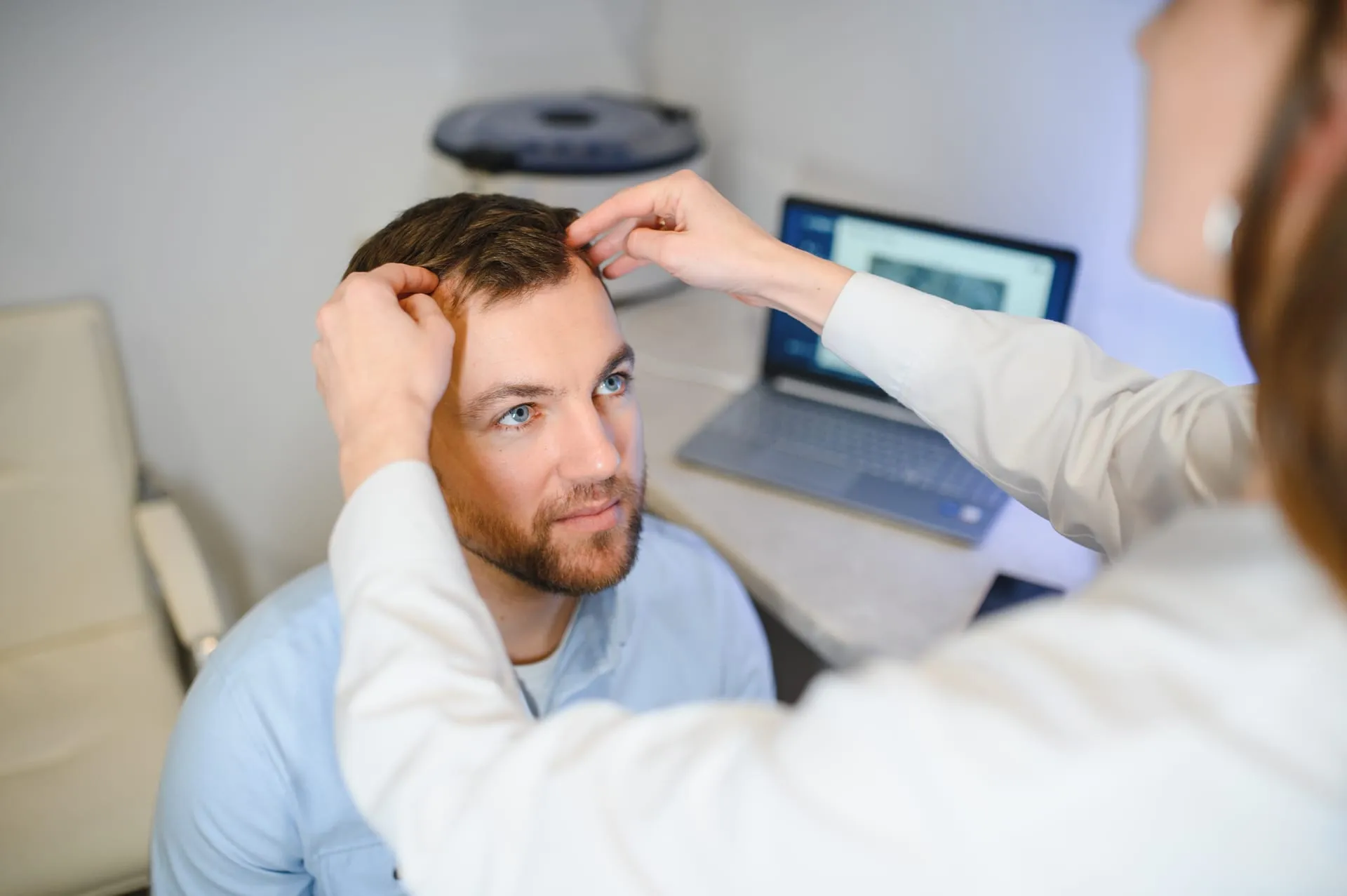
Possible, but more demanding: crown/vertex
The crown (whorl area) is a world of its own. The direction of the whorl, changes of angle and light reflection play a major role there. An unshaven approach can work but is not automatically the best choice.
If the crown has thinned over a large area, more grafts are often needed – and a very even distribution of density. With completely unshaven work, this can reach its limits: not because it would be “impossible”, but because effort, time and organisational complexity rise considerably.
Often not sensible: very large areas and very high graft numbers
The larger the area, the more any additional complexity has an effect. Unshaven techniques are generally more time-consuming. And the longer the operation takes, the greater the demands on the team, workflow and materials management.
This is not scaremongering but logic: quality comes from precision – and precision suffers when the process becomes unnecessarily complicated.
The procedure: how an unshaven hair transplant works in practice
A hair transplant without shaving is no magic trick. The procedure is similar to classic FUE procedures – with a decisive focus on discretion, careful planning and calm execution.
1) Consultation and planning: discretion starts before the operation
If you want to stay discreet, this has to be taken into account at the planning stage.
We typically look at three levels:
- Recipient area: which area is to be treated – and what density is realistic?
- Donor area: how much reserve is there – and where can trimming be placed so that it is not noticeable?
- Hairstyle reality: how do you really wear your hair day to day?
That sounds simple but is crucial. A “discreet” operation is of little use to you if you wear your hair differently in everyday life than at the consultation – and the trimmed spots suddenly become visible as a result.
2) Preparation on the day of surgery
You come with your current hair length. Depending on the approach, only the areas that are technically necessary are then trimmed.
A lot is decided here: not whether hair is trimmed – but where and how. Good planning means that even people close to you do not immediately notice that something has been done.
3) Local anaesthetic and extraction (donor area)
The extraction is carried out under local anaesthetic. With unshaven extraction, the units to be removed are specifically exposed. The grafts are then stored in a solution, sorted and prepared.
More important here than the buzzword “without shaving” is the technical execution: gentle handling, clean work, clear processes. The better this part, the more stable the conditions for the grafts to take well.
4) Hairline design and channels/implantation
Detailed work is needed at the hairline in particular. A good line does not look drawn but grown.
We plan angles, direction and transitions so that the new zone blends with the existing flow of hair. With unshaven work, implantation often takes place between existing hairs – this requires a steady hand and a structured workflow.
5) Aftercare and the first few days
Unshaven procedures often seem “more normal” in everyday life because you don’t look completely different. Medically, however, it is still a procedure.
In the first few days, the focus is usually on scabs, slight redness and washing your hair correctly. Aftercare is not a side issue – it helps determine how smoothly healing goes.
How discreet is the procedure really – and when are you “presentable” again?
This is the question behind the search term – and it deserves an honest answer.
In everyday life, discretion depends mainly on three factors:
- Trimming in the donor area: is it really hidden under the top hair?
- Redness/scabs in the recipient area: how does your skin react?
- Your everyday life: office, building site, working from home, client meetings – every context is different.
Many people are back among others after a few days, as long as nobody gets very close to their head. In people with very fair skin, redness can remain visible for longer. It varies from person to person.

Important: discretion is not the same as “invisible”. You don’t get a new hairline like a filter. You get transplanted hair that heals – and healing can be seen, at least if someone looks closely.
Advantages and limitations: what you can realistically expect
The unshaven hair transplant has real advantages – but it is not automatically the “better” hair transplant.
Advantages
The biggest advantage is social and practical: you can fit the procedure into your everyday life more easily. Many people feel more confident because there is no visible break in their appearance.
This is particularly relevant if you:
- deal with a lot of people at work,
- have appointments coming up at short notice,
- or simply don’t want the people around you to notice a change straight away.
Limitations
The limitations are organisational and technical.
Unshaven work often means:
- more effort per graft,
- longer operating time,
- greater demands on the team, logistics and precision.
And: not every starting point is suitable for it.
If a very large area needs to be treated, a classic (shaved) variant may in the end be the better decision in terms of quality – even if it starts out less discreetly.
Costs: why “without shaving” is often more expensive (and when it isn’t)
Many people expect a premium surcharge for “without shaving”. That is often the case – but not because it is “more luxurious”, but because carrying it out is often more time-consuming and therefore more resource-intensive.
Typical cost factors are:
- Size of the area and number of grafts
- Effort in the donor area (targeted trimming, selection)
- Complexity of implantation (working between longer hairs)
- Duration of the procedure
A clinic is reputable if it does not work with blanket promises but explains why a plan makes sense for you – and what that means in organisational terms.
Risks and side effects: what “without shaving” does not change
“Without shaving” sounds like less of a procedure. Medically, it is still a hair transplant.
Possible issues, usually temporary, include swelling, redness, scabbing, itching – and, depending on the starting point, temporary hair loss in the surrounding area (shock loss). Unshaven variants can look more discreet, but they do not make the biological process any “smaller”. Aftercare, taking it easy and realistic expectations remain essential.
Practical tips: how to plan for discretion in everyday life
This is not about tricks but about pragmatic planning.
- Choice of date: if possible, schedule the operation so that the first few days are quiet.
- Hairstyle: talk openly about how you actually wear your hair. This affects where trimming is possible.
- Working life: if you work very closely with people every day, plan in some buffer time.
- Sport: sweating, friction and pressure on the scalp are an issue at first. It is no drama, but it needs good timing.
These points seem simple – but they often decide whether you feel confident after the operation or are constantly “preoccupied with your head”.

Questions about hair transplants without shaving?
Deciding on an unshaven hair transplant often raises questions – about discretion in everyday life, the right method, or whether your individual starting point is really suitable for it. At Hair Doctors you receive an honest medical assessment and a clear recommendation on which technique makes sense in your case – for maximum naturalness, precision and safety throughout the process.
FAQ on hair transplants without shaving
Does nothing at all really have to be shaved?
Sometimes yes – often no. In practice, “without shaving” very often means: without a full shave, but with small, hidden trimmed areas where the grafts are taken.
Is the quality of the result worse than with a shaved FUE?
Not automatically. What matters is the quality of the extraction, graft handling and implantation precision. In very large cases, a shaved variant can even provide the better basis for quality from an organisational point of view.
Is it suitable for the crown?
It can work, but it depends more on your starting point, the pattern of the whorl and the size of the area. With larger crowns, the question is usually not “is it possible” but “does it make sense in this form”.
When will you see results?
Transplanted hair follows a growth cycle. Immediately after the procedure, the focus is on healing. Visible changes typically develop over the following months; it takes time for the hair to mature fully.
Can you get back to work quickly?
Many people can return to everyday life after a short time, especially if they work in an office. How “discreet” it looks depends on redness, scabs and the people around you.
Conclusion: discreet – but only with a clear plan
A hair transplant without shaving can be the right solution if you don’t want a full shave and want to fit the procedure into your everyday life as inconspicuously as possible.
The key is not the promise of “without shaving” but a careful, individual plan: which areas will be treated? How will the donor area be trimmed without it showing? And how will the implantation be carried out so that angle, direction and density look natural in the end?
Discreet consultation at Hair Doctors
If you want to find out which unshaven variant really makes sense for your starting point, get advice from Hair Doctors. We assess whether “without a full shave” or a completely unshaven approach is realistic for you – and how the procedure can be planned so that discretion and the quality of the result go together.
Arrange your consultation at Hair Doctors now – discreet, individual and with a clear plan for your hairline, receding temples or crown.
Medical note:This article is for general information only and does not replace a medical examination, diagnosis or consultation. Whether a treatment is suitable for you, and which one, should be discussed in person with a specialist. Treatment results vary from person to person.
Safety & quality at Hair Doctors
See our commitment for yourself


Reviews
Patient reviews of our premium partner clinics in Dortmund, Düsseldorf, Hamburg, Nuremberg, Wertheim and Eindhoven (NL):
 Hair DoctorsVerified5,913 reviews on provenexpert.comProud member of the CGCE Group. Read here what real patients of Hair Doctors and the CGCE Group say about us.
Personal 1:1 consultation, no obligation
In person or conveniently by video.
In two consultations we work out with you which treatment suits you.