
Blog · 30 September 2026 · 9 min read
DHI hair transplant or FUE: what is the difference?
You have seen offers for a “DHI hair transplant” and are wondering whether it is a procedure in its own right – and whether it would be better for you than FUE. The short answer: DHI mainly describes a particular way of placing the grafts. Read on to find out what that means and what matters when choosing.
Medically reviewed by Dr. med. Martin Reifenrath, Specialist in Plastic and Aesthetic Surgery · Last updated:
Key points at a glance
- DHI stands for Direct Hair Implantation: the grafts, small groups of hair roots, are placed directly with an implanter – a pen with a fine hollow needle, often called a Choi implanter.
- The grafts are usually harvested as with FUE, single extraction from the fringe of hair. DHI is therefore a variant of placement, not a separate harvesting method.
- In classic FUE, fine channels are created first and the grafts are then placed with forceps. With a sharp implanter, the channel and placement happen in one step.
- In the specialist literature, neither technique is considered fundamentally superior. What matters is the team’s experience, the hair and skin, and good planning.
- Terms such as “DHI” or “sapphire” describe tools and work steps, not the quality of the result.
- Which technique suits you can only be judged after a medical examination.
What is a DHI hair transplant?
DHI is short for Direct Hair Implantation. It refers to placing the grafts with an implanter: a pen with a fine hollow needle at its tip. For decades, forceps were the only tool for placing grafts, until Dr. Choi introduced the implanter in 1992. That is why people often speak of the Choi implanter; in the specialist literature, this type is also called the Korean implanter.
This is how a sharp implanter works: a graft is loaded into the hollow needle, the needle punctures the scalp, the graft stays behind in the puncture channel, and the needle is then withdrawn. The channel and placement therefore happen in one step. There are also implanters with a blunt needle, which are used to place grafts in channels created beforehand.
Important for the comparison: in DHI, harvesting is usually done as with FUE, i.e. individually with a fine hollow needle from the fringe of hair at the back of the head. Strictly speaking, anyone asking “DHI or FUE” is therefore comparing two ways of placing the grafts after single extraction.
How does graft placement differ between FUE and DHI?
| Step | FUE with forceps | DHI with a sharp implanter |
|---|---|---|
| Harvesting | individually with a fine hollow needle | usually the same |
| Channels for the grafts | created beforehand with a fine blade or needle | created during placement by the implanter’s needle |
| Placement | with fine forceps into the finished channels | with the implanter, which is loaded with the graft beforehand |
| Who does what | The ISHRS counts creating the channels among the tasks of doctors; placement is a separate step | Puncture and placement are one step – the ISHRS counts creating the channels among the tasks of doctors |
Both approaches are established. A 2024 review notes that forceps allow safe placement in the hands of well-trained teams. Implanters have gained in importance because grafts from single extraction are considered delicate. According to this review, which instrument is chosen depends on how well the team handles the respective instrument and on its pros and cons.
What are the pros and cons of the implanter?
A practical guide by doctors who use the technique themselves (2023) lists the following advantages of the sharp implanter over forceps: a simple workflow, a shorter operating time and less crushing, because the grafts are not gripped with forceps. In addition, the puncture angle can be finely adjusted to the curl and thickness of the hair.
The same paper also lists disadvantages: the technique is more laborious if there is a tendency to bleed, it is labour-intensive for the doctor, and implanters are more expensive than forceps. In inexperienced hands, grafts can be pushed back out during placement, which can impair growth – the technique requires experience.
The two-step approach with channels created beforehand has its own strengths: placement only takes place once the bleeding has subsided, and this approach is considered helpful for firm or scarred scalps. On the other hand, gripping delicate grafts with forceps requires a lot of practice.
Who is each technique suitable for?
There is no general recommendation. According to the practical guide mentioned above, more than one technique may even make sense for one and the same person, depending on the area of the scalp. Factors include:
- the skin: with firm or scarred scalps, channels created beforehand are often preferable,
- a tendency to bleed: this makes placement in the same step more difficult,
- the hair: thickness, curl and the number of hairs per graft influence the channel size and the tool – implanters first became established for straight, strong hair with mostly one to two hairs per graft,
- the team: what matters is which instrument it has the most experience with.
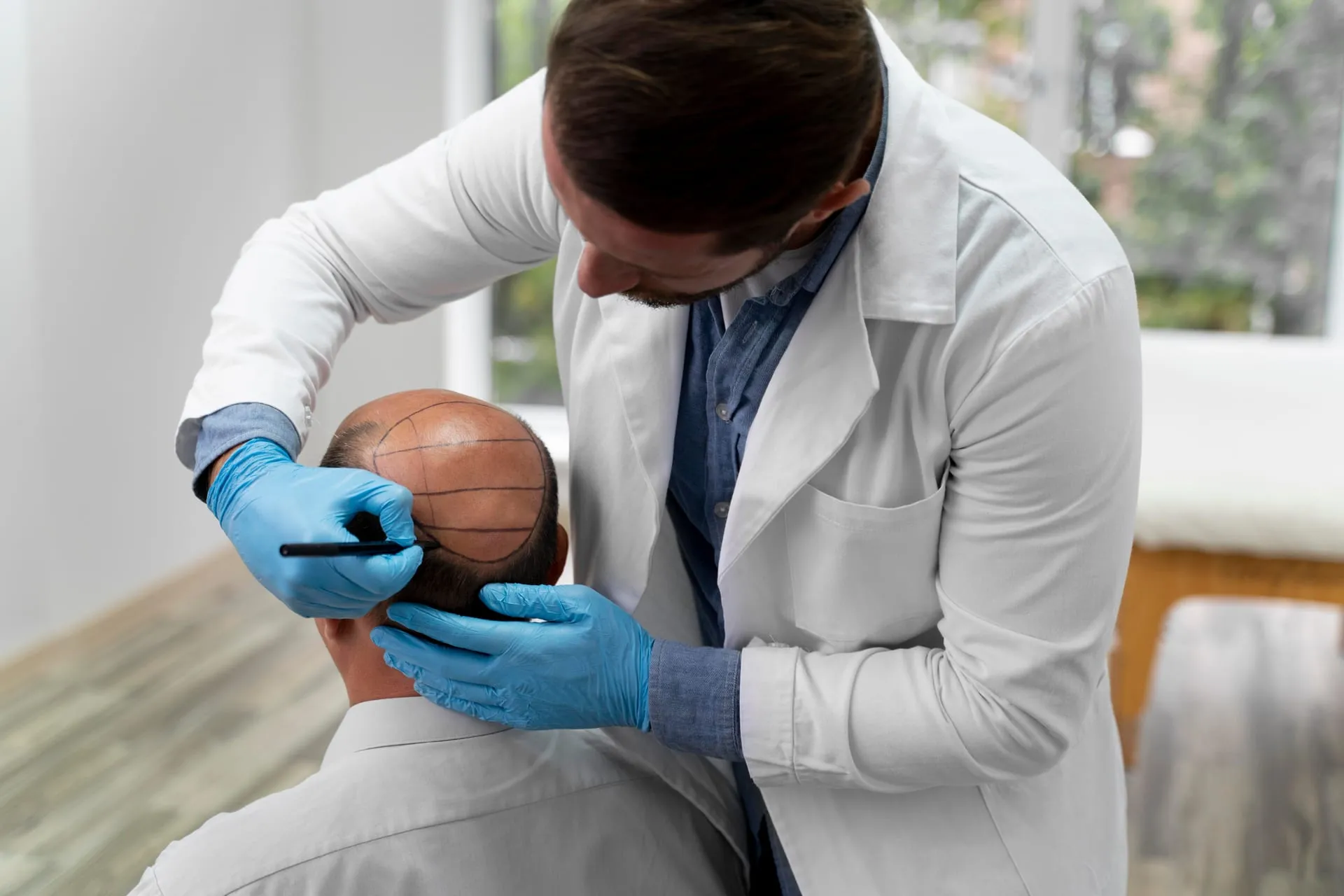
At least as important is the question that comes first: single extraction (FUE) or strip harvesting (FUT, in which a narrow strip of skin is removed from the fringe of hair)? The comparison FUE vs FUT shows the differences; the procedures are described on the pages FUE hair transplant and FUT hair transplant.
What do “DHI”, “sapphire” and other terms really mean?
Many names circulate around hair transplants that sound like a procedure in their own right. Usually they stand for a tool or a single work step:
- “DHI” means placement with an implanter; harvesting is usually done individually as with FUE.
- “Choi implanter” is the original implanter with a sharp needle; there are now other implanters and placement aids.
- “Sapphire” or “sapphire FUE” refers to blades made of sapphire that are used to create the fine channels for the grafts. The term therefore relates to creating the channels, not to harvesting.
- Brand names of individual providers usually stand for a particular combination of instruments and workflows. Ask what exactly is behind them.
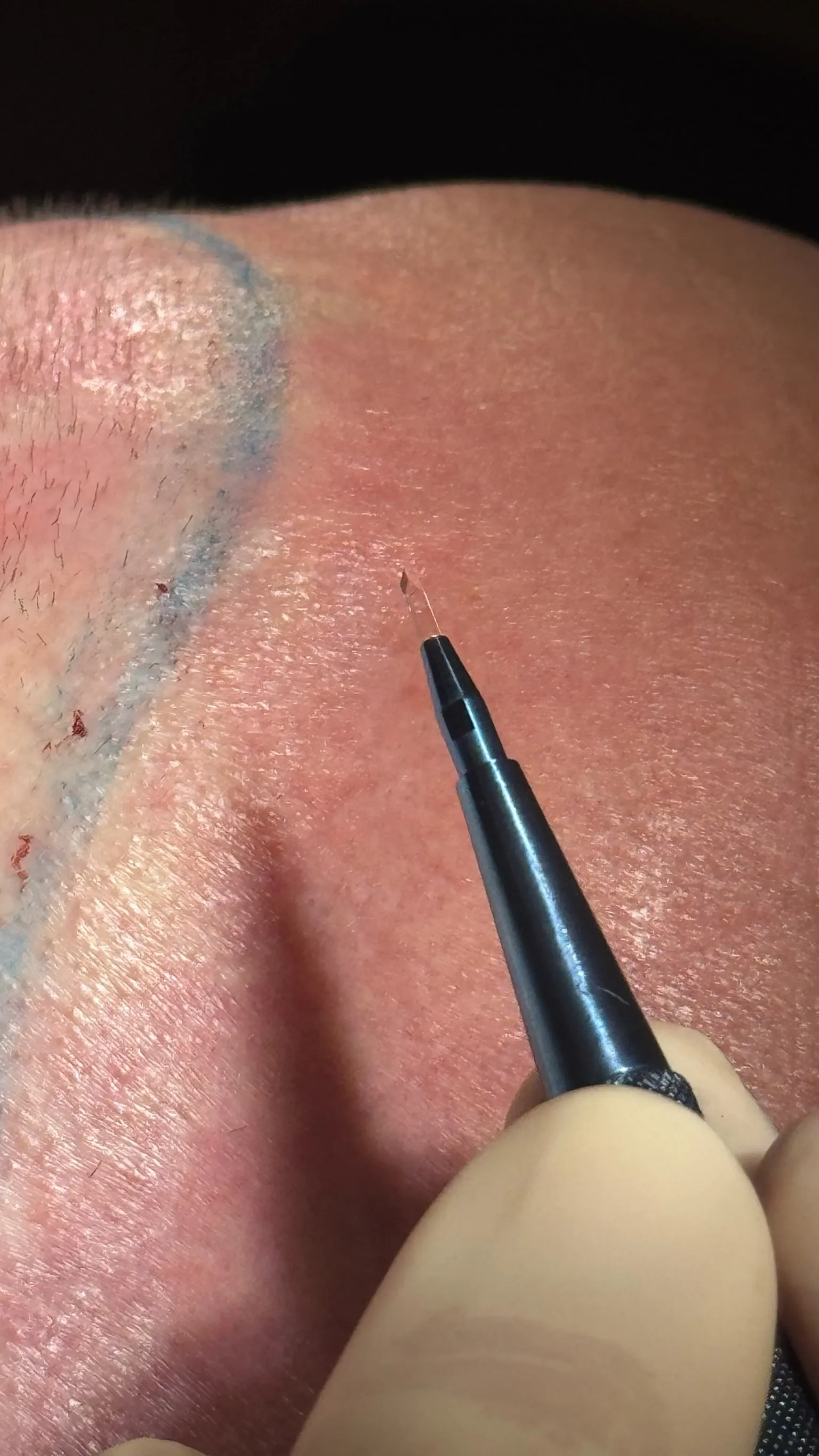
There have been only a few studies on sapphire blades so far. A purely computational study concluded in 2021 that a particular sapphire blade creates the smallest wound area; this was not measured on patients there. According to the practical guide mentioned above, the right depth of the channels is considered decisive above all for graft growth.
Even the name FUE has been adapted: in 2018, the ISHRS, the international professional society for hair surgery, changed the meaning of “extraction” (pulling out) to “excision” (cutting out). The old term, it said, had been used to play down the surgical nature of the procedure. This applies to every name: a hair transplant remains an operation, whatever the procedure is called.
What matters more than the name?
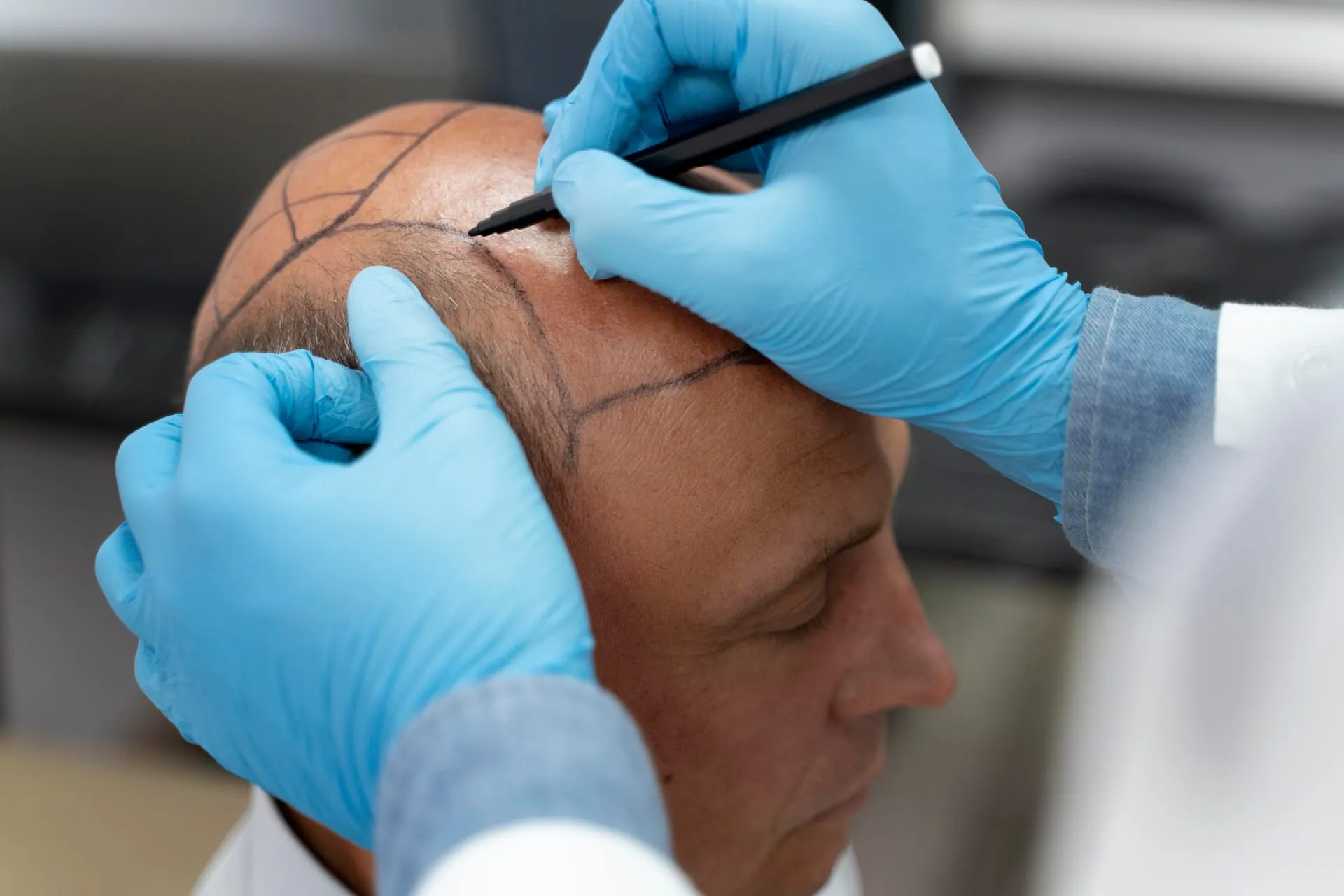
The instrument is only one part of the treatment. At least as important are a diagnosis of the cause of your hair loss, a realistic assessment of the donor area, a natural-looking hairline and a number of grafts that still leaves room for later treatments – more on this in the article How many grafts do I need? and in the graft calculator.
Also ask who carries out which step. The ISHRS counts examination, planning, harvesting, designing the hairline and creating the channels among the tasks of doctors. If an implanter punctures the channel itself, creating the channel and placement coincide – so also ask who handles the implanter. Whether treatment is possible entirely without shaving is a separate question – more on this in the article Hair transplant without shaving.
An honest assessment: what the studies show – and what they don’t
The papers on which this article is based are a review, a practical guide, a computational study and statements from the professional society – not studies in which patients were randomly assigned to a technique. In addition, part of the specialist literature comes from doctors who have developed instruments or are involved in them; for example, one author of the practical guide mentioned holds patents on an implanter, by their own account. Claims such as “DHI grows better” or “sapphire heals faster” therefore cannot be generalised.
No placement technique makes a hair transplant risk-free. Possible effects include swelling, crusts, infections, a temporary – in some cases permanent – loss of existing hair (shock loss), weaker graft growth than hoped for and small scars in the donor area. Even with an implanter, harvesting remains a surgical procedure with many small wounds.
A transplant redistributes existing hair. How dense the result will be depends, among other things, on the donor area, the area to be treated and the hair type, and varies from person to person. The procedure does not stop further hereditary hair loss; sometimes additional drug treatment prescribed by a dermatologist makes sense.
Which procedure suits you?
At Hair Doctors, we use FUE, FUT, the Hair Doctors FUEplus method and robot-assisted harvesting with ARTAS® iX. Which procedure is an option for you and at which location it is offered is something we clarify in a 1:1 consultation with no obligation – in person at six locations or by video. At Hair Doctors, treatment is always preceded by two consultations in which we look at your hair situation and donor area and tell you openly what is realistic.
Frequently asked questions
Is DHI better than FUE?
Not fundamentally. DHI describes placing the grafts with an implanter; harvesting is usually done as with FUE. In the specialist literature, neither placement technique is considered fundamentally superior; what matters is the team’s experience, the hair and skin, and good planning.
Is DHI a separate method?
More of a variant. The grafts are usually harvested individually as with FUE and then placed with an implanter instead of forceps. Strictly speaking, “DHI or FUE” is therefore a comparison of two ways of placing the grafts.
What is a Choi implanter?
A pen with a fine hollow needle, introduced by Dr. Choi in 1992. The graft is loaded into the needle and placed as the needle punctures the scalp, so that the channel and placement happen in one step. Today there are other implanters, including ones for channels created beforehand.
Who places the grafts in DHI?
That is a good question for any consultation. If the implanter punctures the channel itself, this is where the recipient site is created – and the professional society ISHRS counts creating recipient sites among the tasks of doctors. So ask specifically who handles the implanter.
Does the hair have to be shaved for a DHI hair transplant?
For single extraction, the donor area is usually trimmed in full or in part – even if the grafts are then placed with an implanter. Whether the recipient area has to be short depends on the approach; more on this in the article Hair transplant without shaving.
What does sapphire FUE mean?
“Sapphire” refers to blades made of sapphire that are used to create the fine channels for the grafts. The term therefore relates to creating the channels, not to harvesting. Whether sapphire blades make a noticeable difference to the result has hardly been studied so far.
When will I see results after a DHI hair transplant?
As after any hair transplant, many of the transplanted hairs initially fall out in the first few weeks; the new hairs usually start to grow after a few months. The final result shows after about a year and varies from person to person.
Medical note:This article is for general information only and does not replace a medical examination, diagnosis or consultation. Whether a treatment is suitable for you, and which one, should be discussed in person with a specialist. Treatment results vary from person to person.
Show sources (5)
- Speranzini M, Souza SEG (2024): Advancements in Graft Placement Techniques. Facial Plastic Surgery 40(2):223–233. PubMed-ID 37879353. pubmed.ncbi.nlm.nih.gov/37879353
- Park JH, Ho YH, Manonukul K (2023): A Practical Guide to Hair Graft Placement Using the Sharp Implanter Method. Clinical, Cosmetic and Investigational Dermatology 16:1777–1785. pmc.ncbi.nlm.nih.gov/articles/PMC10349607
- Ahmad M, Ismail M (2021): Effect of different shapes of recipient site creation micro-blades at varying angles and wound injury. Journal of Cosmetic Dermatology 20(11):3610–3615. PubMed-ID 33599101. pubmed.ncbi.nlm.nih.gov/33599101
- International Society of Hair Restoration Surgery (ISHRS) (2024): ISHRS Position Statement on Qualifications for Scalp Surgery. Überarbeitet am 13.07.2024. ishrs.org/ishrs-position-statement-on-qualifications-for-scalp-surgery
- International Society of Hair Restoration Surgery (ISHRS) (2018): Popular Hair Restoration Technique Updates Name to Reflect Surgical Nature of Procedure. Mitteilung vom 06.03.2018. ishrs.org/popular-hair-restoration-technique-updates-name-to-reflect-surgical-nature-of-procedure
Personal 1:1 consultation, no obligation
In person or conveniently by video.
In two consultations we work out with you which treatment suits you.